- No.1068, Nanwan Rd, Kunshan city 215341, Jiangsu Province, P. R. China
- info@ya-va.com
- +86 18017127502
Essential Modular Conveyor Parts
Explore our core conveyor parts engineered for robust performance, seamless integration, and long-term durability in heavy-duty industrial applications.
Hungary's Industrial Landscape & The Demand for Conveyor Systems
Hungary has established itself as one of Central Europe's most dynamic industrial powerhouses. Positioned strategically at the crossroads of major European trade corridors, the country has attracted massive foreign direct investment, transforming it into a vital hub for automotive production, electronics manufacturing, pharmaceuticals, food processing, and logistics. High-tech production centers in cities like Győr, Debrecen, Kecskemét, and Budapest require continuous, uninterrupted operations. In these modern facilities, conveyor systems serve as the critical arteries of the shop floor. When a single modular chain or leveling foot fails, entire assembly lines can grind to a halt, incurring thousands of Euros in lost productivity every minute.
As Hungarian factories transition rapidly toward Industry 4.0 paradigms, the demand for smart, highly adaptive, and easily maintainable conveyor components has skyrocketed. Modular conveyor parts offer the precise flexibility required to modify layouts quickly, scale up production capacities, and handle diverse product profiles. Suppliers who can provide not only high-quality hardware but also reliable, localized after-sales support are becoming indispensable strategic partners for Hungarian enterprises.
Automotive Excellence
Automotive assembly plants require heavy-duty modular belts and structural leveling feet capable of supporting high loads and operating continuously under harsh conditions.
Food & Beverage Hygiene
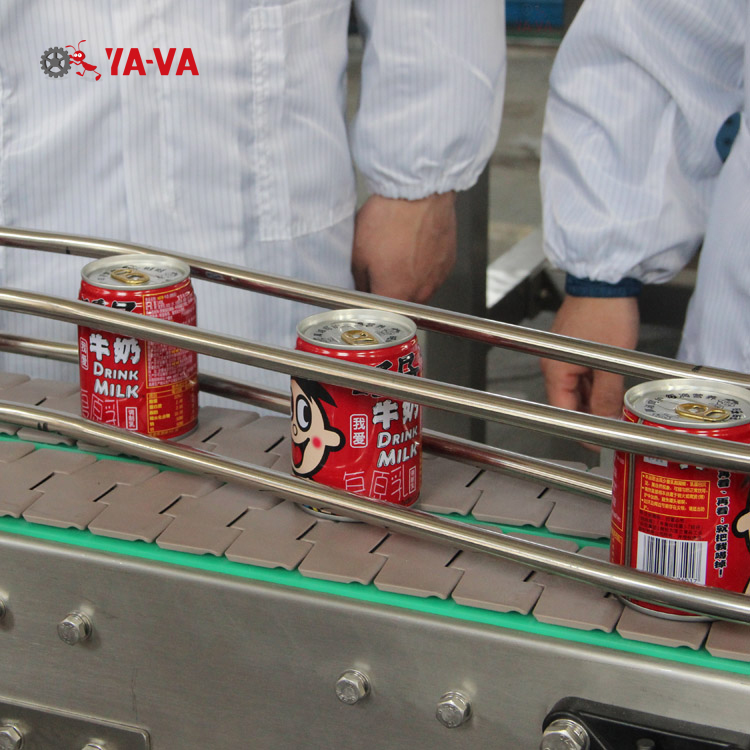
Strict European hygienic standards require FDA-compliant plastic modular chains and stainless steel structures that resist frequent washdowns and chemical cleanings.
Intralogistics & E-Commerce
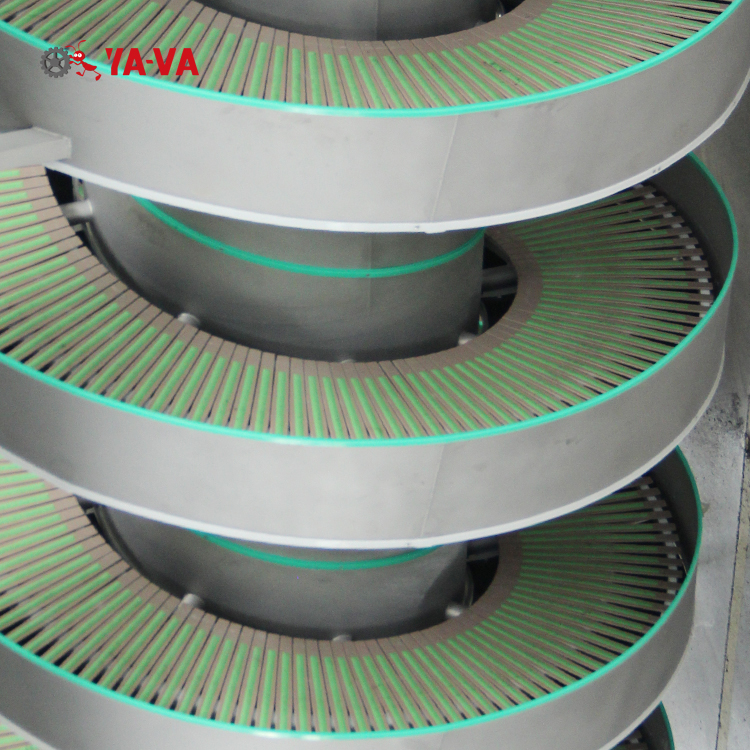
The explosive growth of logistics hubs in Hungary demands high-speed sortation, spiral elevators, and flexible curved conveyors to optimize floor space.
Technological Evolution in Hungarian Manufacturing
The adoption of automated guided vehicles (AGVs), robotic cell integration, and high-speed packaging lines has reshaped Hungarian factories. To match this technological evolution, modern conveyor systems must be equally advanced. Traditional flat belt systems are increasingly replaced by plastic modular belts and flexible chain conveyors. These systems allow for multidirectional movement, tight turning radii, and vertical transport, maximizing the utilization of factory floor space. Moreover, modularity ensures that if a section of a belt is damaged, only the affected modules need to be replaced, minimizing downtime and maintenance costs.
Our Global Strength & Local Commitment
YA-VA is an independent company that has developed, produces, and maintains premium conveyor systems to ensure that our customers receive the most cost-effective, high-performance solutions available today.





About YA-VA Conveyors
YA-VA is a leading high-tech company providing intelligent conveyor solutions. Our comprehensive ecosystem consists of the Conveyor Components Business Unit, Conveyor Systems Business Unit, Overseas Business Unit (Shanghai Daoqin International Trading Co., Ltd.), and the state-of-the-art YA-VA Foshan Factory.
For over two decades, we have focused on transportation machinery R&D development and manufacturing. Our mission is to engineer high-precision modular parts and complete conveying systems that integrate seamlessly into modern production lines, enhancing operational efficiency and lowering the total cost of ownership for our global clientele.
Read More About UsSelecting the Right Modular Conveyor Parts Supplier in Hungary
When sourcing modular conveyor parts in Hungary, procurement managers and maintenance engineers must evaluate suppliers based on several critical criteria. First, compliance with European quality and safety standards (such as CE, FDA, and EU food contact regulations) is non-negotiable. Second, the breadth of the product catalog determines whether a factory can source all its components—ranging from modular belts and chains to guide rails, sprockets, and leveling feet—from a single, reliable partner. This single-source approach simplifies supply chain logistics and ensures component compatibility.
The Critical Role of Localized After-Sales Service
Purchasing high-quality hardware is only the first step. The true differentiator for Hungarian enterprises is the availability of responsive, localized after-sales service. This includes technical consulting during the design phase, on-site installation supervision, system audits, and rapid delivery of critical spare parts. A supplier with a robust after-sales network can dispatch support quickly to minimize downtime, conduct preventative maintenance training for local staff, and advise on optimization strategies to extend the lifespan of the conveying equipment.
Customized Engineering for Diverse Industrial Applications
Every industry has unique conveying requirements. In the automotive sector, parts must withstand contact with oils, grease, and heavy impact forces. In contrast, the food and beverage industry demands open-area modular belts that facilitate easy cleaning and excellent drainage, preventing bacterial growth. Pharmaceutical production requires antistatic materials and gentle handling systems to prevent damage to delicate vials. YA-VA’s engineering team works closely with Hungarian clients to customize conveyor configurations, material selections, and wear-strip layouts, ensuring optimal performance tailored to the specific environment.
Predictive Maintenance and Industry 4.0 Integration
The future of conveyor technology lies in smart systems. By integrating sensors into critical components like bearings, drive units, and modular chains, Hungarian factories can monitor system health in real-time. Data on vibration, temperature, and belt tension can be analyzed to predict failures before they occur. This transition from reactive to predictive maintenance allows factories to schedule servicing during planned shutdowns, eliminating unexpected production halts and significantly extending the service life of the entire conveyor infrastructure.

Flexible Chain Conveyors
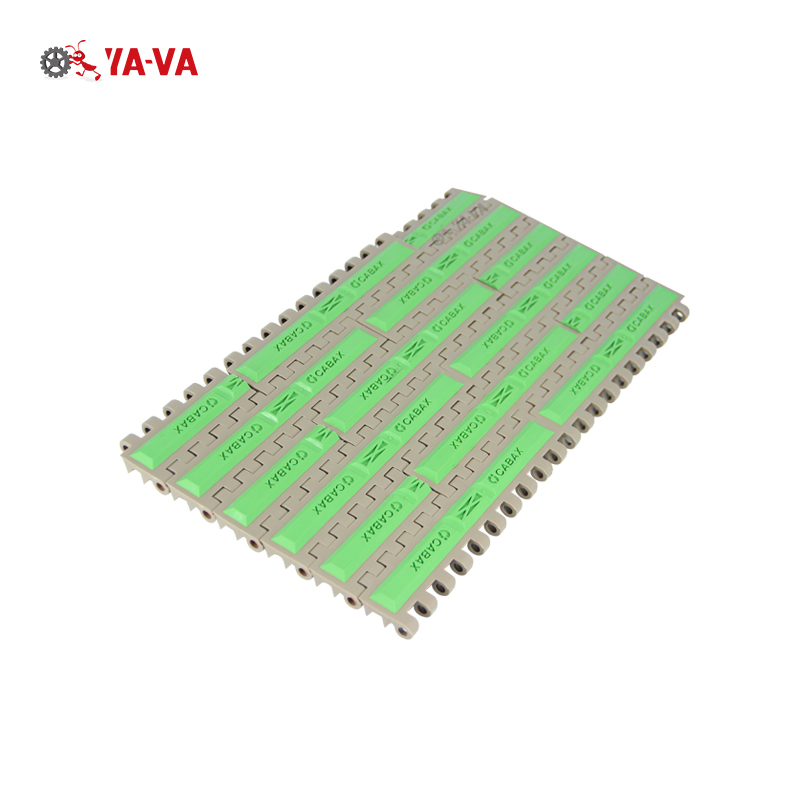
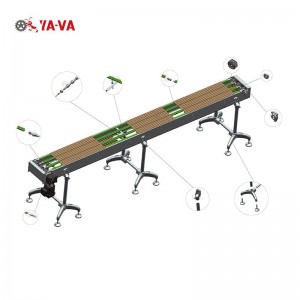
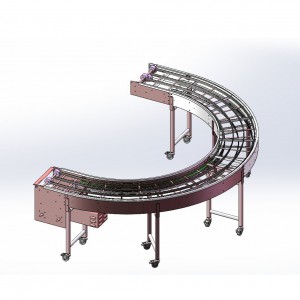
Our flexible slat chain conveyor product lines cover a wide range of industrial applications. These highly versatile, multiflexing conveyor systems utilize specialized plastic chains in various configurations to navigate horizontal turns, vertical inclines, and tight spaces efficiently.
Designed for smooth product handling, low noise levels, and minimal maintenance, YA-VA chain conveyors are widely adopted in packaging lines, pharmaceutical manufacturing, and assembly processes across Hungary and global markets.
Get in TouchFeature Products & Conveyor Systems
With over 20 years of dedicated R&D and manufacturing experience, YA-VA delivers high-performance conveyor systems designed to optimize workflow and productivity.


Maximizing Conveyor System Efficiency in Hungary
To achieve optimal throughput, Hungarian operations must focus on system design, component quality, and structured maintenance workflows. Below, we examine key strategies that plant managers can implement to elevate their material handling capabilities:
1. Optimizing Friction and Wear Material Selection
The interaction between the conveyor chain and the wear strips is a primary source of energy consumption and component fatigue. Sourcing high-performance UHMW-PE (Ultra-High-Molecular-Weight Polyethylene) wear strips and guide rails significantly reduces friction coefficients. This reduction not only lowers the power required by drive motors, contributing to industrial energy efficiency goals in the European Union, but also extends the operational life of the conveyor chains. In high-speed packaging lines, choosing the correct material grade prevents dust generation and maintains product cleanliness.
2. Ergonomics and Stability: Heavy-Duty Leveling Feet
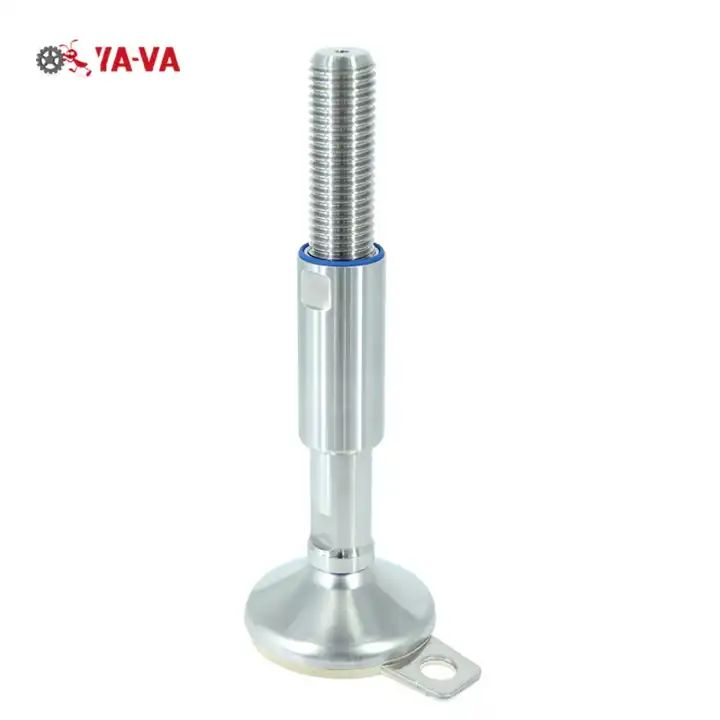
Industrial floors are rarely perfectly level, and machinery vibrations can cause misalignment over time. Implementing heavy-duty adjustable leveling feet made from high-grade stainless steel with non-slip vulcanized rubber bases ensures that conveyor frames remain perfectly aligned and stable. This stability is crucial for high-speed transfers and prevents premature wear on bearings and drive shafts. In food and pharmaceutical applications, leveling feet must be designed without exposed threads to prevent product buildup and simplify sanitization processes.
3. Standardizing Modular Components
A major challenge for maintenance departments in Hungary is managing a diverse inventory of spare parts. By standardizing conveyor widths, chain types, and sprocket sizes across multiple production lines, plants can significantly reduce their inventory holding costs. Standardized modular parts allow maintenance teams to perform quick swaps, reduce training requirements, and negotiate better bulk pricing with suppliers. YA-VA supports standardization audits to help factories streamline their component inventory.
4. Eco-Friendly and Sustainable Conveying
Environmental sustainability has become a core metric for Hungarian manufacturers, driven by corporate goals and European regulations. Modern modular conveyor parts are increasingly manufactured using recyclable polymers and low-friction additives that minimize carbon footprints. Furthermore, by designing conveyor layouts that utilize gravity rollers and energy-efficient motor drives, companies can achieve substantial energy savings, contributing to greener manufacturing practices.
News & Industry Information
YA VA Looks Forward to Welcoming You in June 2026
Stay tuned for our upcoming participation in the major international industrial exhibitions. We will showcase our latest advancements in AI-driven conveying technology and smart modular parts designed for next-generation factories.

YA-VA Thailand Bangkok PROPAC
YA-VA Thailand Bangkok PROPACK exhibition concluded successfully. We would like to express our sincere gratitude to all our valued customers for visiting our booth. Your support is the driving force behind our progress. BOOTH NO:AY38 We sincerely invite you...

Chain vs Belt Conveyor: Differences & Types
What is the difference between chain and belt conveyors? Chain conveyors and belt conveyors are both used for material handling, but they differ in design, function, and applications. Learn how to select the right system for your factory layout.
Cooperative Partners
We collaborate with leading global enterprises to deliver reliable material handling solutions across various industries.