- No.1068, Nanwan Rd, Kunshan city 215341, Jiangsu Province, P. R. China
- info@ya-va.com
- +86 18017127502
Essential Automotive Conveying Elements
The Crucial Role of Stainless Steel Gravity Roller Conveyors in Modern Automotive Assembly
In the highly automated landscape of the automotive industry, material handling systems form the backbone of the production floor. As automotive plants transition to support both traditional internal combustion engine (ICE) vehicles and the rapid rise of electric vehicles (EVs), the demand for robust, reliable, and highly efficient transport systems has never been higher. Among the various solutions available, the Stainless Steel Gravity Roller Conveyor has established itself as an indispensable tool for engineers seeking to optimize floor layouts, reduce energy consumption, and guarantee structural longevity.
Understanding the Mechanical Excellence of Stainless Steel Gravity Rollers
Gravity roller conveyors operate on a deceptively simple principle: using the force of gravity to move materials down a declined path, or allowing operators to manually push loads along a level path. However, when applied to the automotive sector, this simplicity must be paired with extreme engineering precision. Stainless steel (predominantly high-grade SUS304 or SUS316) is chosen for the rollers, frames, and bearings due to its exceptional mechanical properties. Unlike carbon steel or plastic rollers, stainless steel offers a remarkable strength-to-weight ratio, allowing it to support heavy automotive loads—such as engine blocks, transmissions, and stamped metal body panels—without structural deformation over decades of continuous operation.
Resisting the Harsh Automotive Environment
Automotive manufacturing environments are notoriously demanding. Stamping presses, machining centers, and paint booths introduce a variety of environmental hazards, including metal shavings, lubricating oils, cooling fluids, hydraulic liquids, and harsh chemical solvents. Standard conveyor materials quickly degrade, rust, or accumulate debris under these conditions, leading to unexpected downtime and costly maintenance. Stainless steel gravity roller conveyors are inherently resistant to chemical corrosion and oxidation. Their smooth, non-porous surfaces prevent oil absorption and make cleaning simple, ensuring that the assembly line remains clean and free of contaminants that could impact vehicle quality.
Our Strength & Global Footprint
We are an independent company that has developed, produces and also maintains the conveyor system to ensure that our customers receive the most cost effective solutions available today.




Deep-Dive Application Scenarios in Automotive Assembly Lines
To truly appreciate the value of a stainless steel gravity roller conveyor, one must look at specific zones within an automotive manufacturing facility where these systems are deployed to solve critical logistical challenges.
1. Engine and Powertrain Sub-Assembly Lines
The assembly of engines and transmissions requires a combination of heavy-duty transport and precise manual intervention. Gravity roller conveyors are frequently used as workcell buffers. After an engine block is cast and machined, it travels along the line. Stainless steel rollers provide the necessary durability to handle these heavy castings. Because the conveyor is gravity-driven, operators can easily pull a block into their station, complete a assembly step (such as installing pistons or valvetrains), and push it back onto the main line. The low friction of high-precision stainless steel bearings ensures that even components weighing hundreds of kilograms can be moved with minimal physical effort, improving worker ergonomics and safety.
2. Stamping Press Outfeed and Scrap Handling
In the stamping shop, giant presses stamp out steel and aluminum sheets into doors, hoods, and structural frames. The sharp edges of raw stamped parts and the presence of drawing compounds make this a hostile zone for conveyor belts. Stainless steel gravity rollers are positioned at the outfeed of stamping presses to collect finished panels. The impact resistance of stainless steel prevents damage when heavy panels drop onto the rollers. Additionally, gravity-fed decline lines are used to move metal scrap away from the stamping area into collection bins without consuming electrical power, offering an energy-efficient waste-management solution.
3. Battery Pack Assembly for Electric Vehicles (EVs)
The shift to electric mobility has introduced new challenges to automotive material handling. EV battery packs are incredibly heavy, often weighing between 400kg and 700kg, and require extremely clean handling conditions to prevent electrical short circuits or contamination. Stainless steel gravity roller conveyors are ideal for EV battery assembly lines. Their non-magnetic properties (when using specific grades of stainless steel) prevent interference with delicate electronic components and battery management systems. Furthermore, the absence of electric motors directly under the conveyor rollers in gravity zones eliminates electromagnetic interference (EMI) and reduces the risk of sparks, which is a critical safety consideration in battery handling zones.

Leading Provider of Intelligent Conveyor Solutions
YA-VA is a leading high-tech company providing intelligent conveyor solutions. Our comprehensive structure consists of the Conveyor Components Business Unit, Conveyor Systems Business Unit, Overseas Business Unit (Shanghai Daoqin International Trading Co., Ltd.), and the YA-VA Foshan Factory. With over two decades of dedicated R&D and manufacturing experience, we deliver tailored conveyor systems that optimize efficiency and reliability across the globe.
Read More About Us
Automotive Chain Conveyor Systems
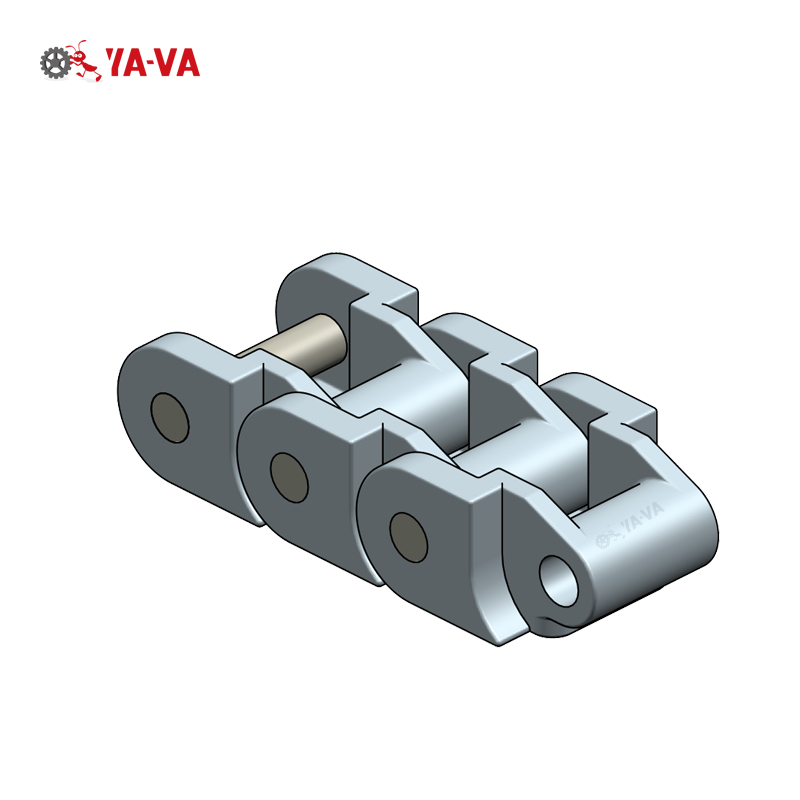
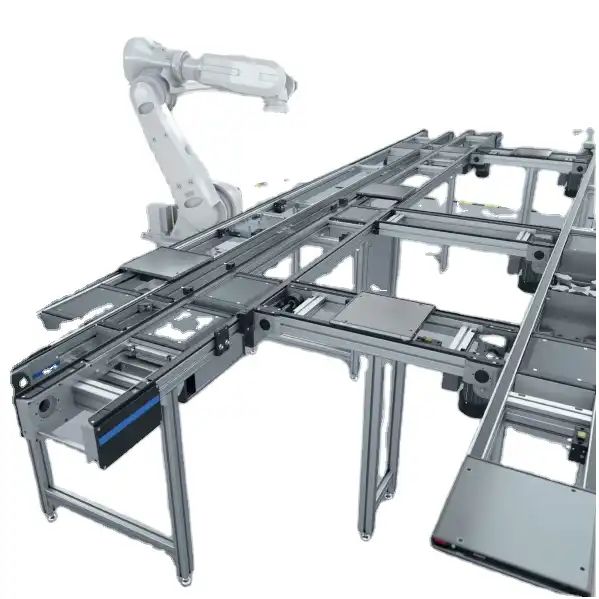
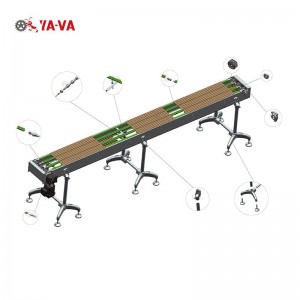
Flexible slat chain conveyor product lines cover a wide range of applications. These multiflexing conveyor systems use plastic and stainless steel chains in many configurations to transport parts through complex automotive assembly, packaging, and testing layouts.
Get in TouchTechnical Specifications and Customization Trends in Automotive Conveying
When specifying a stainless steel gravity roller conveyor for an automotive plant, engineers must evaluate several technical parameters to ensure optimal performance and safety.
Roller Diameter and Wall Thickness
The load-carrying capacity of a gravity roller conveyor is directly determined by the diameter of the rollers and the thickness of the tube walls. For light-duty automotive trim parts, a roller diameter of 38px or 50px may be sufficient. However, for heavy powertrain components or chassis parts, diameters of 60px, 76px, or even 89px are required. Wall thicknesses typically range from 1.5px to over 3.0px to prevent bowing under heavy static loads. The selection of precision-ground, sealed ball bearings is equally critical, as they minimize rolling resistance and prevent the ingress of dust, moisture, and cutting fluids.
Frame Configurations and Modular Designs
Modern automotive factories demand flexibility. Assembly lines must be reconfigured quickly to accommodate new vehicle models. Therefore, modular stainless steel frames are highly preferred. These frames feature pre-punched holes along the side profiles, allowing for easy adjustment of roller pitch (the spacing between rollers) and height. The side frames themselves are often constructed from bent stainless steel channels or heavy-duty structural profiles to handle lateral impacts from forklifts or automated guided vehicles (AGVs).
Integration with Automation: AGVs, AMRs, and Smart Sensors
While gravity conveyors are inherently passive, they are increasingly integrated into smart, connected factory ecosystems. In modern automotive plants, stainless steel gravity roller conveyors are outfitted with photoelectric sensors, pneumatic stops, and deceleration brakes. When a part rolls down the conveyor, sensors detect its presence and activate a pneumatic gate to hold the part until the next workstation is clear. Furthermore, gravity conveyors are used as transfer stations for Autonomous Mobile Robots (AMRs). An AMR can align itself with the end of a gravity conveyor, and a mechanical tilt mechanism can transfer the payload onto the conveyor without requiring any motorized components on the conveyor itself, reducing complexity and maintenance costs.
Sustainability and Energy Efficiency (The Green Factory Movement)
As global automotive manufacturers commit to achieving carbon neutrality, every watt of electricity consumed on the factory floor is scrutinized. Powered conveyors run continuously, consuming significant electrical energy and requiring complex control panels, wiring, and safety enclosures. Stainless steel gravity roller conveyors offer a zero-emission alternative for material transport. By utilizing the natural force of gravity, they move products silently and cleanly. The reduction in carbon footprint, combined with the 100% recyclability of stainless steel, makes gravity conveyors a cornerstone of sustainable factory design.
Our Comprehensive Conveying Portfolio


News and Information
YA VA Looks Forward to Welcoming You in June 2026
Join us at the upcoming international exhibitions where YA-VA will showcase our latest advancements in automotive conveying solutions and automated component handling.
View Details →
YA-VA Thailand Bangkok PROPAC
YA-VA Thailand Bangkok PROPACK exhibition concluded successfully. We express our sincere gratitude to all our valued customers for visiting our booth. Your support drives our progress. BOOTH NO: AY38.
View Details →Difference between chain and belt conveyor?
Chain conveyors and belt conveyors are both used for material handling, but they differ in design, function, and applications: 1. Basic Structure, 2. Driving Mechanism, 3. Load capacity and durability in automotive lines...
View Details →Our Partners