- No.1068, Nanwan Rd, Kunshan city 215341, Jiangsu Province, P. R. China
- info@ya-va.com
- +86 18017127502
Pharmaceutical Beverage Conveyor Systems & Parts
Explore our specialized components designed to handle beverage bottling structures adapted for sterile pharmaceutical packaging environments.
The Convergence of Beverage Conveying & Pharmaceutical Standards
In modern manufacturing, the lines between food, beverage, and pharmaceutical automation are increasingly blurring. Historically, beverage production was characterized by high-volume, high-speed, continuous operations where throughput was the primary metric. Conversely, pharmaceutical manufacturing prioritized sterile conditions, absolute containment, validation, and zero contamination, often at lower line speeds. Today, however, a profound technological crossover is taking place: Beverage conveyor belt concepts are being optimized for the pharmaceutical industry.
Commercial & Industrial Landscape
The global pharmaceutical market is experiencing unprecedented demand for liquid formulations, sterile injectables, vaccines, and biologics. This rise in demand has forced pharmaceutical packaging lines to scale up their production capacities. Traditional batch-based, slow-speed pharmaceutical conveying systems are no longer sufficient to meet global distribution needs. Consequently, engineering teams are turning to the high-throughput design patterns of the beverage industry—specifically, continuous-motion modular belt conveyors, high-speed plastic slat chains, and multi-lane accumulation tables.
This industrial migration requires significant modification of standard beverage equipment. While a beverage line handles carbonated drinks, juices, or beers in highly resilient glass, plastic, or aluminum containers, a pharmaceutical line must handle highly delicate glass vials, ampoules, syringes, and medicine bottles containing life-saving compounds. The integration of beverage conveyor belt designs into pharmaceutical cleanrooms presents a unique set of commercial challenges and opportunities, requiring systems that can run at high speeds without inducing friction, static charge, or micro-particulate shedding.
Deep Application Scenarios in Pharma Lines
Where exactly do these adapted beverage conveyor belts fit into a pharmaceutical facility? Let us dissect the core application scenarios:
- Sterile Liquid Bottling & Syrups: Similar to beverage filling, cough syrups, oral drops, and liquid vitamins are filled into plastic or glass bottles. Slat chain conveyors adapted from beverage lines transport these bottles smoothly under sterile filling nozzles, ensuring zero spillage and minimal vibration to prevent foaming of the liquid.
- Vial and Ampoule Accumulation: In beverage packaging, buffer tables are used to keep the line running if a labeling machine stops. In pharmaceutical production, this concept is refined using sanitary bi-flow accumulation tables. These tables allow delicate glass vials to accumulate gently without clumping, scratching, or breaking, maintaining a continuous flow to autoclaves and freeze-dryers.
- Cleanroom Glass Transport: Standard beverage modular belts are modified with special FDA-approved, low-friction, anti-static POM (Polyoxymethylene) materials. These belts are deployed in ISO-classified cleanrooms to transport vials from washing stations through depyrogenation tunnels, where temperatures can exceed 300 degrees Celsius near the tunnel entry.
Our Strength
We are an independent company that has developed, produces and also maintains the conveyor system to ensure that our customers receive the most cost effective solutions available today.

Expert engineers and skilled manufacturing staff driving global automation.

State-of-the-art production facilities optimized for precision conveyor components.

A robust global support and distribution network serving diverse industries.

Successful worldwide installations, from simple lines to complex automated systems.
Engineering Specifications for Pharmaceutical Grade Conveying
Adapting high-speed beverage conveyor belt designs for pharmaceutical packaging requires strict compliance with international regulatory frameworks, including the FDA (Food and Drug Administration), GMP (Good Manufacturing Practice), and EU Annex 1. Every component, from the structural frame to the smallest sprocket, must undergo rigorous validation processes.
1. Material Selection & Non-Shedding Properties
In a standard beverage plant, conveyor wear particles are a minor concern. In a pharmaceutical cleanroom, however, micro-particles shed by moving plastic chains can compromise the sterility of injectable drugs. To prevent this, conveyor belts designed for pharmaceutical applications utilize ultra-high-molecular-weight polyethylene (UHMWPE) or premium POM blends engineered specifically for low wear and high chemical resistance. These materials minimize friction, preventing the generation of microscopic dust and static electricity that could attract contaminants to the containers.
2. Sanitary Design and Washdown Capabilities
Pharmaceutical processes require frequent cleaning and sterilization cycles to prevent cross-contamination between different batches of medicine. Conveyors must feature an open-frame design, typically constructed from high-grade 304 or 316 stainless steel, with smooth, self-draining surfaces. Standard beverage conveyor structures are modified to eliminate crevices, threaded holes, and sharp corners where bacteria could multiply. The integration of quick-release mechanisms allows operators to lift the belt without tools, enabling thorough Clean-in-Place (CIP) or Wash-in-Place (WIP) routines using aggressive sterilizing agents.
3. Precision Container Handling and Low Backpressure
Unlike plastic beverage bottles, glass pharmaceutical vials are prone to tipping and breakage. When vials accumulate on a conveyor belt, the friction between the belt and the bottom of the containers can build up backpressure, causing vials to lift, tip over, or shatter. To counter this, pharmaceutical conveyor belts employ low-backpressure (LBP) rollers or specialized micro-pitch modular chains. These designs allow the conveyor belt to slide smoothly underneath static vials, ensuring stable transport even during sudden line stoppages.

Intelligent Conveyor Solutions Leader
YA-VA is a leading high-tech company providing intelligent conveyor solutions. Our comprehensive structure consists of the Conveyor Components Business Unit, Conveyor Systems Business Unit, Overseas Business Unit (represented by Shanghai Daoqin International Trading Co., Ltd.), and the YA-VA Foshan Factory.
For over two decades, we have focused on the research, development, and manufacturing of advanced transportation machinery, establishing ourselves as a trusted brand across global markets.
Read More About UsThe Future of Intelligent Pharmaceutical Conveying
As the manufacturing sector transitions toward Industry 4.0, conveyor systems are evolving from passive transport tracks into intelligent, data-generating assets. In the pharmaceutical sector, this shift is accelerating due to the need for absolute product traceability and high operational efficiency.
AI-Driven Sorting and Machine Vision Integration
Modern pharmaceutical lines are integrating high-resolution cameras and AI vision sensors directly onto conveyor networks. As vials or blister packs move along the conveyor belt, machine vision systems inspect them in real-time for defects, fill levels, cap alignments, and serial code accuracy. The conveyor system must interface seamlessly with these sensors, providing precise speed control and vibration-free transport to ensure accurate imaging. Defective products are automatically redirected via high-speed pneumatic reject gates without disrupting the main production flow.
Predictive Maintenance and IoT Connectivity
Unplanned downtime in a pharmaceutical facility can cost thousands of dollars per minute and lead to the loss of sensitive biological batches. To mitigate this risk, next-generation conveyor systems are equipped with IoT sensors that monitor belt tension, motor temperature, bearing vibration, and chain wear. By analyzing this data, maintenance teams can predict component failures before they occur and schedule replacements during planned maintenance windows, ensuring continuous, reliable operation.
Modularity and Rapid Line Changeover
The rise of personalized medicine and small-batch biological drug production requires manufacturing lines to be highly flexible. Conveyors must be easily reconfigurable to handle different container sizes, from wide syrup bottles to miniature vaccine vials. Modular conveyor systems allow operators to swap guide rails, change belt configurations, or adjust line layouts within minutes, reducing changeover times and maximizing overall equipment effectiveness (OEE).
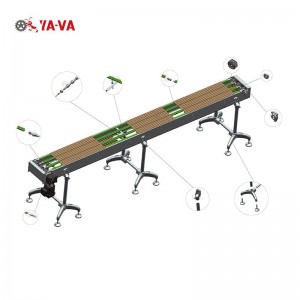
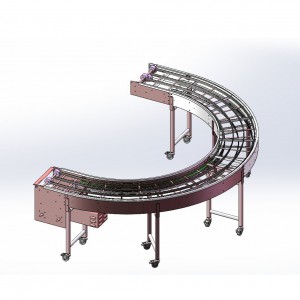
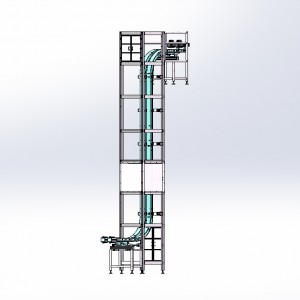
Featured Conveyor Systems & Equipment
More than 20 years focusing on transportation machinery R&D development and manufacturing. Explore our comprehensive systems optimized for pharmaceutical applications.


News & Information
YA VA Looks Forward to Welcoming You in June 2026
Join us at the upcoming international packaging and processing exhibition, where we will showcase our latest cleanroom conveyor systems.

YA-VA Thailand Bangkok PROPAC Exhibition
Our participation in the Bangkok PROPACK exhibition concluded successfully. We express our sincere gratitude to all our valued customers.
Chain vs. Belt Conveyors: Key Differences
An in-depth look at structural features, driving mechanisms, and application scopes between modular belt and chain conveyor systems.
Cooperative Partners
Partnering with leading brands worldwide to deliver reliable automated production lines.






Comprehensive Product Range
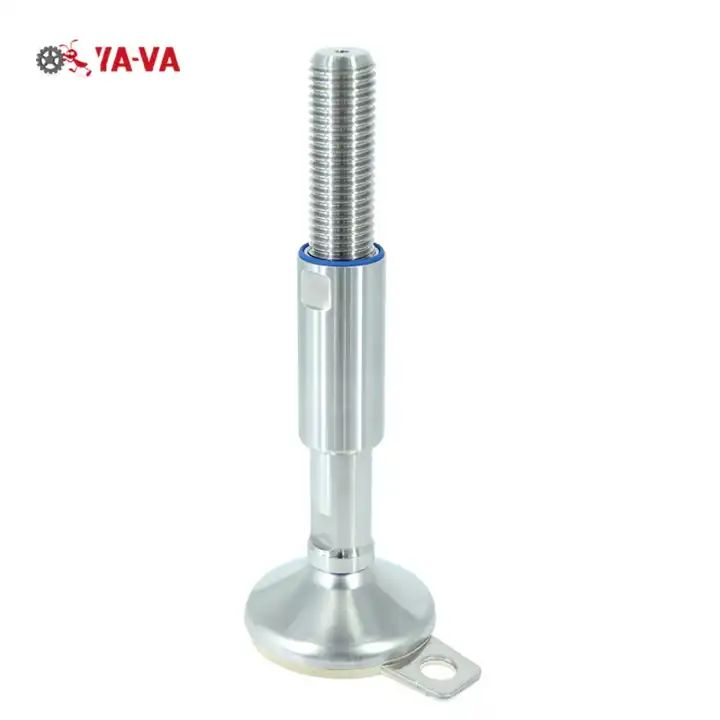
Explore our complete selection of chains, sprockets, guide profiles, and leveling feet designed for sanitary and cleanroom conveyor setups.