- No.1068, Nanwan Rd, Kunshan city 215341, Jiangsu Province, P. R. China
- info@ya-va.com
- +86 18017127502
Sanitary & Hygienic Conveying Solutions
Designed specifically for cleanroom environments, vial transport, packaging, and high-speed sorting lines in the pharmaceutical sector.
Industrial Landscape of Pharmaceutical Conveying
The pharmaceutical manufacturing landscape is undergoing a massive paradigm shift. Driven by stricter global regulations, the rise of personalized medicine, and the urgent need for rapid vaccine deployment, manufacturers are pivoting toward ultra-hygienic, modular, and highly flexible automation technologies. In this context, modular conveyor belts for the pharmaceutical industry have transitioned from simple material-handling utilities to critical components of process control and validation.
Traditionally, conveying systems relied on flat PVC or polyurethane belts. While functional, these older designs present significant sanitation risks, including belt slippage, fraying, and hard-to-clean seams where bacterial biofilms can accumulate. Modern modular conveyor belts, constructed from FDA-compliant engineering plastics such as Acetal (POM), Polypropylene (PP), and Polyethylene (PE), solve these challenges. Their interlocking link design eliminates tensioning issues, minimizes maintenance, and allows for rapid, tool-less assembly and disassembly—a critical feature for minimizing downtime during clean-in-place (CIP) and clean-out-of-place (COP) procedures.
Commercial Dynamics & Market Drivers
From a commercial standpoint, the global pharmaceutical packaging and processing equipment market is expanding rapidly. The integration of modular conveying lines enables manufacturers to easily adapt to shifting product demands, such as transitioning a line from vial-filling to pre-filled syringes. This modularity reduces capital expenditure (CAPEX) by allowing lines to be reconfigured rather than completely replaced. Furthermore, with regulatory bodies like the FDA and the European Medicines Agency (EMA) enforcing stringent guidelines (such as EU GMP Annex 1) regarding contamination control, the demand for washdown-ready, low-particle-emission conveyor systems has reached an all-time high.

Dedicated experts in precision conveyor engineering.

Advanced manufacturing and assembly facilities globally.

Worldwide sales, support, and technical integration networks.

Successful automation deployments in diverse industries.
Our Strength & Core Expertise
We are an independent company that has developed, produces and also maintains the conveyor system to ensure that our customers receive the most cost effective solutions available today. YA-VA is a leading high-tech company providing intelligent conveyor solutions.
Our operations consist of the Conveyor Components Business Unit, Conveyor Systems Business Unit, Overseas Business Unit (Shanghai Daoqin International Trading Co., Ltd.), and YA-VA Foshan Factory. By maintaining complete control over design, material selection, and manufacturing, we guarantee the highest standards of hygiene and reliability required by the medical and pharmaceutical sectors.

In-Depth Application Scenarios in Pharmaceutical Processing
Modular conveyor belts are not a one-size-fits-all solution. Different stages of pharmaceutical manufacturing demand specific belt designs, materials, and motion configurations. Below, we explore the primary application scenarios in detail.
1. Sterile Vial, Ampoule, & Syringe Transport
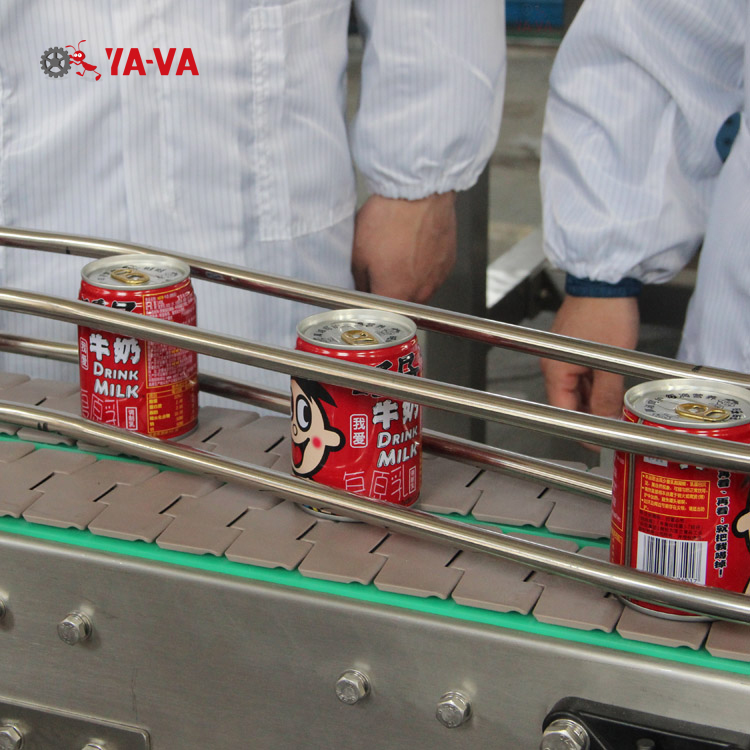
In aseptic filling lines, conveying systems must handle small, delicate glass containers at extremely high speeds without causing breakage, tipping, or cosmetic damage. Flat top modular chain conveyors made of low-friction, high-stability acetal polymers are ideal here. They provide a perfectly flat, continuous surface that prevents vials from falling over during transfer or accumulation.
2. Cleanroom Environments (ISO Class 5 / Class 100)
Conveyor belts operating in cleanrooms must generate minimal airborne particulate matter. Standard belts can shed micro-particles due to friction. Specialized modular plastic belts, engineered with self-lubricating materials and run on ultra-clean stainless steel frames, prevent particle contamination. They are highly resistant to aggressive sterilizing agents like vaporized hydrogen peroxide (VHP).
3. Secondary Packaging, Cartoning, & Labelling
Once products are sealed in vials or blisters, they move to secondary packaging. Here, modular conveyors with integrated side-grippers, curves, and inclines are utilized to orient, elevate, and sort boxes and bottles. Slat chain systems with adjustable widths allow the same line to handle multiple carton sizes with minimal changeover time.
4. Inspection, Serialization, & Track-and-Trace
Global regulations require strict track-and-trace capabilities for pharmaceutical products. Modular conveyors integrated with high-speed vision systems, barcode readers, and weight checkers ensure that every single unit is verified. The stable, vibration-free movement of modular belts is critical for high-resolution cameras to capture precise data on the fly.
Modular Conveyor Components & Systems
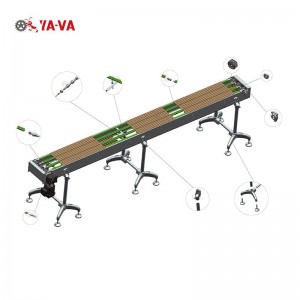
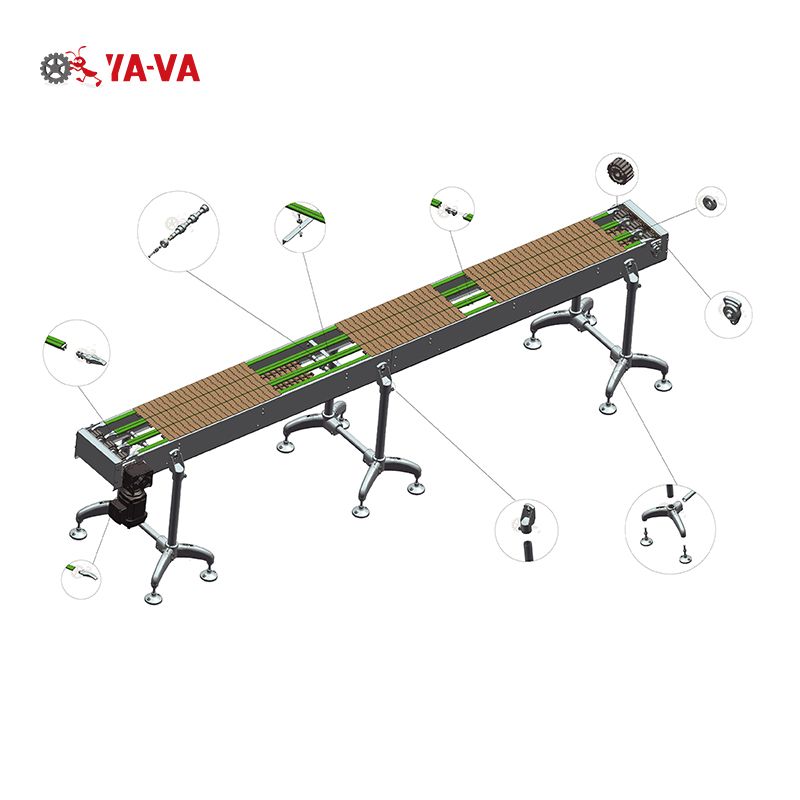
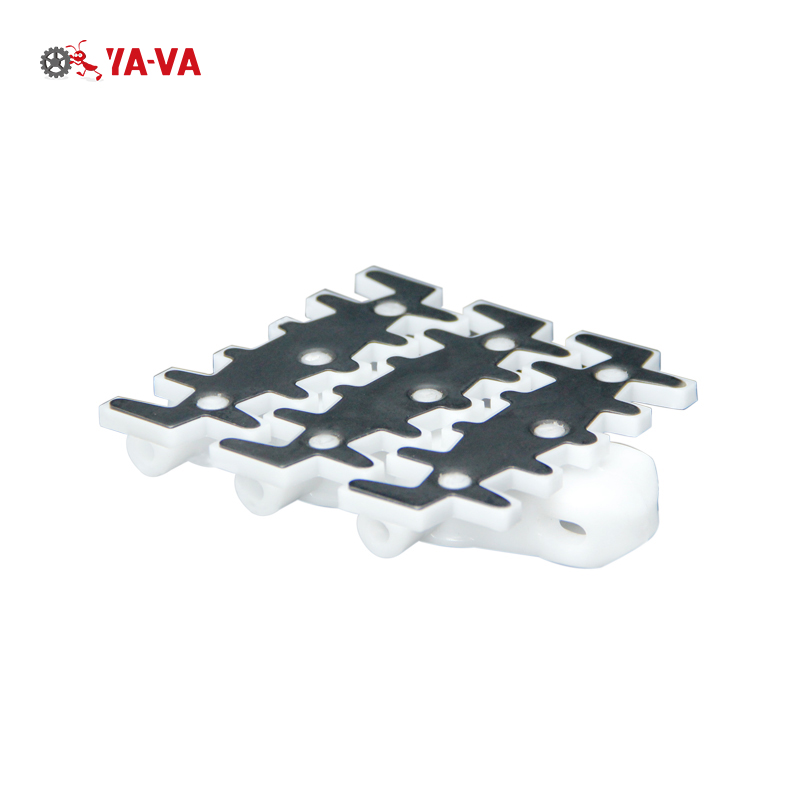
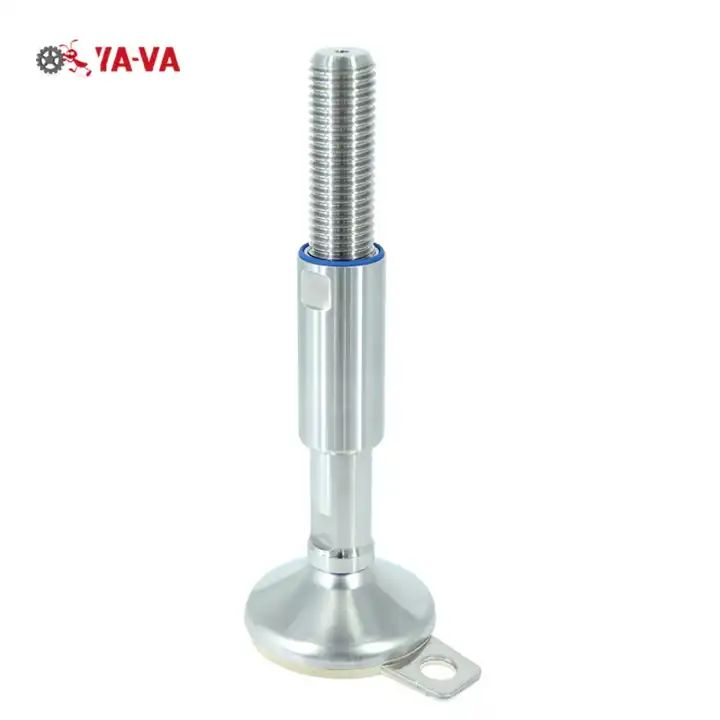
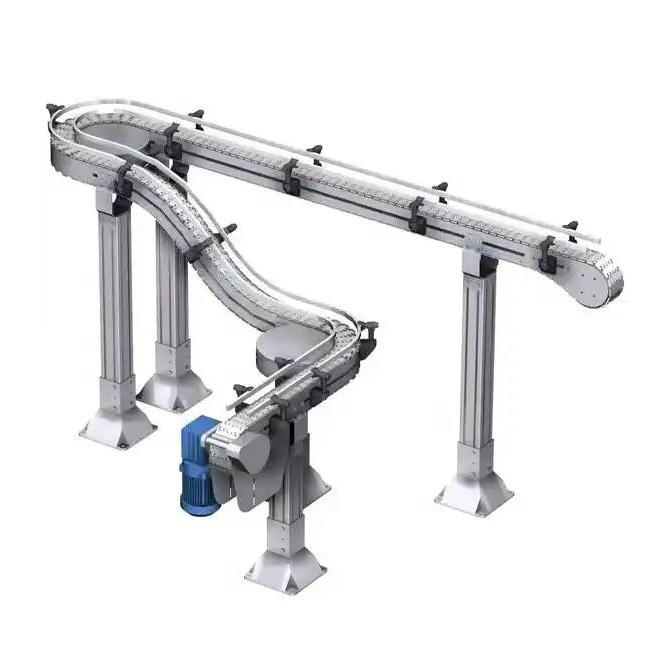
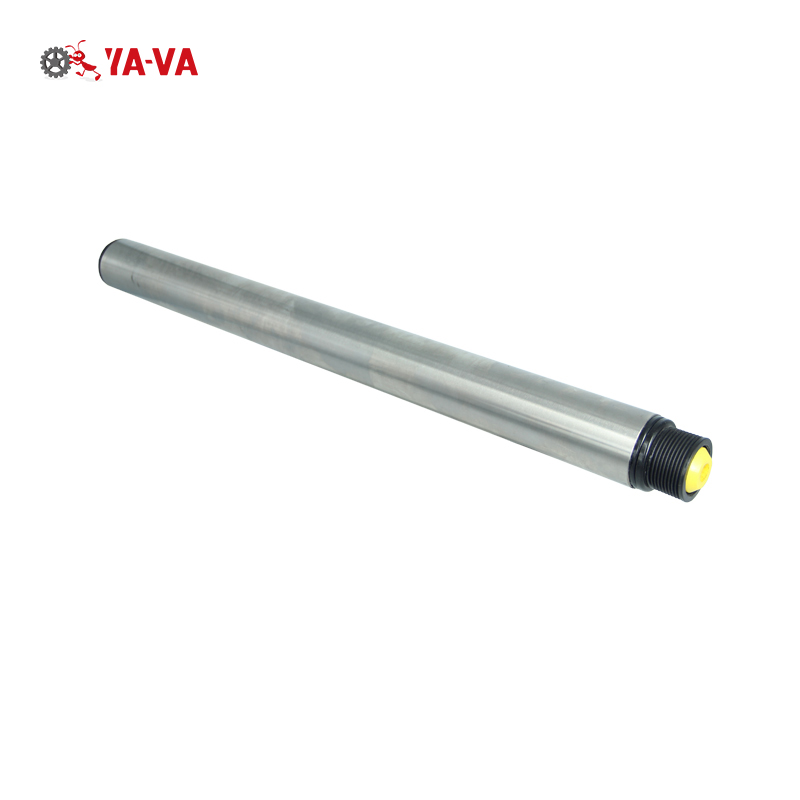
To support complex production lines, YA-VA offers a comprehensive range of structural components, flexible chain systems, and robust rollers. These components ensure seamless integration and long-term durability.
Key Design Trends in Pharmaceutical Modular Belts
As technology advances, modular conveying systems are incorporating smarter features to enhance performance, safety, and efficiency.
1. Advanced Polymer Materials
Modern modular belts utilize state-of-the-art plastics engineered to resist high temperatures, acidic or alkaline cleaning agents, and constant friction. Some modular belts are infused with antimicrobial properties to actively inhibit the growth of bacteria and mold on the belt surface between cleaning cycles.
2. Smart Automation & IoT Integration
The integration of sensors directly into the conveyor frame allows for real-time monitoring of belt speed, tension, and motor temperature. Predictive maintenance algorithms can analyze this data to alert operators before a mechanical failure occurs, avoiding costly unplanned downtime in continuous pharmaceutical production.
3. Energy-Efficient Drive Systems
By matching low-friction modular plastic chains with high-efficiency direct-drive motors, modern conveyor lines significantly reduce power consumption. This supports the global pharmaceutical industry's push toward sustainable, carbon-neutral manufacturing facilities.
News & Information
Stay updated with the latest events, exhibition schedules, and technical insights from YA-VA.
YA VA Looks Forward to Welcoming You in June 2026
Join us at our upcoming international exhibitions where we will showcase the latest advancements in cleanroom-compatible modular conveyor systems.

YA-VA Thailand Bangkok PROPAC
YA-VA Thailand Bangkok PROPACK exhibition concluded successfully. We would like to express our sincere gratitude to all our valued customers for visiting our booth. Your support is the driving force behind our progress. BOOTH NO: AY38.
View DetailsChain vs. Belt Conveyor: Key Differences & Types
What is the difference between chain and belt conveyor? Chain conveyors and belt conveyors are both used for material handling, but they differ in design, function, and applications in sterile packaging environments.
Frequently Asked Questions (FAQ)
Q1: What materials are recommended for modular conveyor belts in cleanrooms?
For pharmaceutical cleanrooms, high-density polyethylene (HDPE) and polypropylene (PP) are highly recommended. These materials have low outgassing properties, high chemical resistance, and do not shed fibers or particles. Acetal (POM) is also widely used for high-strength applications, though it must be formulated to minimize static buildup and friction.
Q2: How do modular conveyor belts improve hygiene compared to traditional belts?
Unlike traditional fabric or PVC belts that have seams and can absorb liquids, modular plastic belts consist of interlocking plastic modules. This design allows for easy cleaning, as the belt can be opened at any point. The non-porous surface of engineering plastics prevents the absorption of liquids and the growth of bacteria, making them ideal for washdown processes.
Q3: Can modular conveyors handle curved layouts in tight cleanroom spaces?
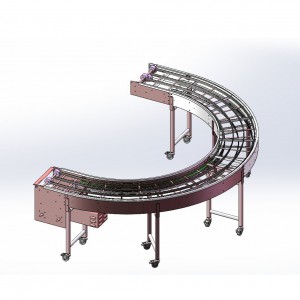
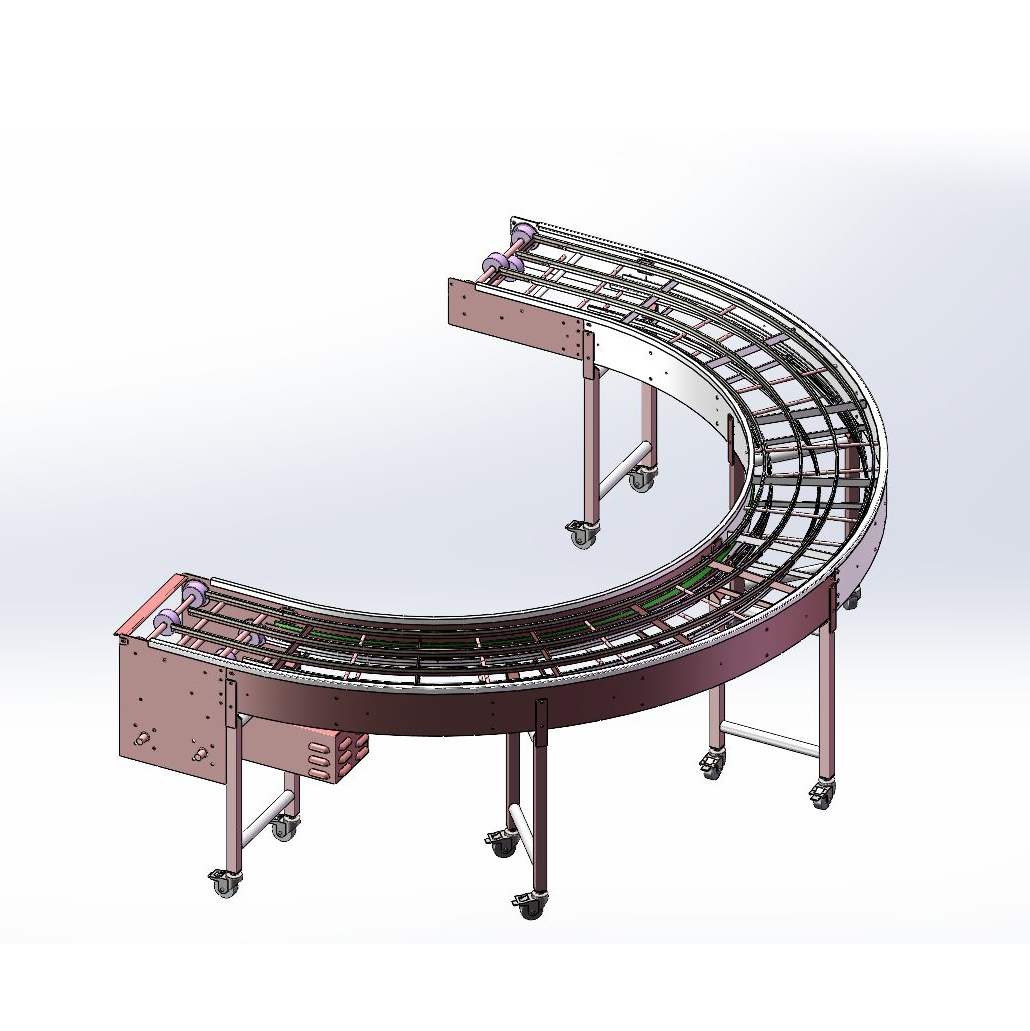
Yes, side-flexing and curved modular conveyors are specifically designed to navigate tight corners and elevation changes without requiring separate drive systems. This allows for a continuous, single-drive conveyor line that reduces transfer points, minimizes the risk of product damage, and saves valuable cleanroom floor space.
Q4: Are YA-VA conveyor components compliant with FDA and GMP standards?
Absolutely. YA-VA designs and manufactures conveyor systems using FDA-compliant plastics and high-grade 304 or 316 stainless steel. Our designs adhere to Good Manufacturing Practices (GMP) and European Hygienic Engineering & Design Group (EHEDG) guidelines, ensuring they meet the strict validation requirements of the pharmaceutical industry.
Our Cooperative Partners






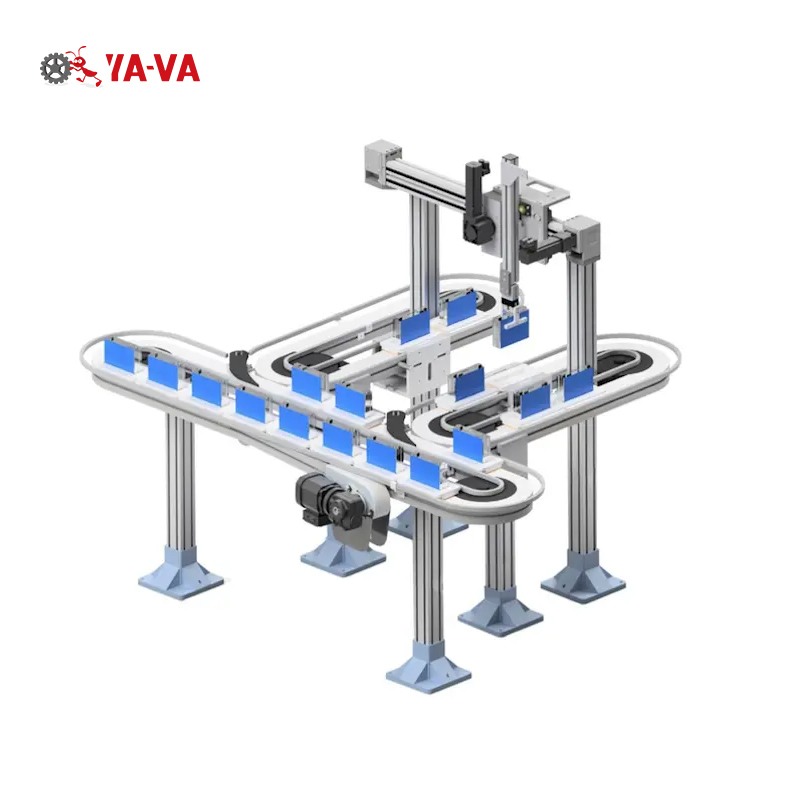
Featured Pharmaceutical Conveying Equipment
Explore our specialized machinery engineered for pharmaceutical packaging lines, bottle handling, and multi-level transport.