Uzbekistan's Industrial Boom and the Demand for Smart Automation
Uzbekistan is currently undergoing a massive economic transformation. Driven by national development strategies and foreign direct investment, the country's manufacturing, food processing, pharmaceutical, and textile sectors are modernizing at an unprecedented pace. Cities like Tashkent, Samarkand, and Namangan are rapidly evolving into major industrial hubs in Central Asia. To maintain competitiveness, local enterprises are shifting away from labor-intensive processes toward fully automated production lines. At the heart of this transition is the need for reliable, hygienic, and highly efficient material handling systems, making high-quality modular conveyor chains an absolute necessity.
Modern production facilities require conveyor systems that minimize product damage, maximize throughput, and withstand rigorous cleaning protocols. Traditional fabric belt conveyors often fall short when dealing with sharp curves, steep inclines, or heavy washdown environments. This is where modular conveyor chains offer a superior technical alternative, providing local manufacturing plants with the versatility and durability needed to optimize their logistical workflows.
Understanding Modular Conveyor Chains: Features and Technical Advantages
Modular conveyor chains consist of injection-molded plastic links or modules connected by solid plastic or metal hinge pins. Unlike traditional flat belts, these systems are positively driven by sprockets, eliminating the risk of belt slippage, tracking issues, or edge fraying. This unique design provides several distinct advantages for industrial operations:
- Exceptional Flexibility: Modular chains can handle straight runs, tight horizontal curves, side-flexing configurations, and vertical inclines on a single continuous drive, reducing the number of transfer points and motors required.
- Superior Hygiene and Cleanability: Made from food-grade polymers such as Polyethylene (PE), Polypropylene (PP), and Polyacetal (POM), these chains resist chemical corrosion, moisture absorption, and bacterial growth, making them ideal for strict sanitary applications.
- Easy Maintenance and Reduced Downtime: If a section of the chain is damaged, only the affected modules need to be replaced, rather than the entire belt. This dramatically shortens repair times and keeps production lines running efficiently.
- High Load Capacity and Wear Resistance: The robust interlocking structure distributes tension evenly across the width of the chain, allowing it to carry heavy loads, sharp packaging materials, and abrasive products without stretching or tearing.
Localized Applications of Modular Conveyor Systems in Uzbekistan
1. Food and Beverage Processing Plants
The agricultural and food processing industries are cornerstones of Uzbekistan's domestic economy. From processing fresh fruits and vegetables in the Fergana Valley to bottling mineral water and dairy products in Tashkent, modular plastic chains provide the clean, rust-free transport required for raw ingredients and finished packages alike. Flat-top and flush-grid chains allow for easy drainage during washdowns, ensuring compliance with international food safety standards such as HACCP.
2. Pharmaceutical and Medical Packaging
With Uzbekistan expanding its domestic pharmaceutical manufacturing capabilities, maintaining sterile production environments is paramount. Small-pitch modular chains and flexible slat chains are extensively utilized to convey small medicine bottles, vials, blister packs, and cardboard cartons smoothly through filling, labeling, and secondary packaging machines without tip-overs or product damage.
3. Automotive Assembly and Heavy Component Manufacturing
As home to robust automotive production clusters, Uzbekistan's industrial sector handles heavy, complex components on a daily basis. Heavy-duty modular conveyor belts are engineered to support massive weights, resisting impacts from metal parts and exposure to industrial oils, lubricants, and cooling fluids. They ensure a steady, reliable flow of materials along assembly lines and inspection stations.
Key Trends Shaping the Conveyor Technology Market in Central Asia
As regional competition intensifies, industrial operations in Uzbekistan are adopting Industry 4.0 principles to drive efficiency. The integration of smart sensors, IoT modules, and variable frequency drives (VFDs) with modular conveyor networks allows operators to track production metrics in real-time, anticipate maintenance requirements, and dynamically adjust line speeds. Furthermore, there is a growing emphasis on energy-efficient conveyor components that reduce friction, lowering overall power consumption and operational costs for manufacturing facilities.






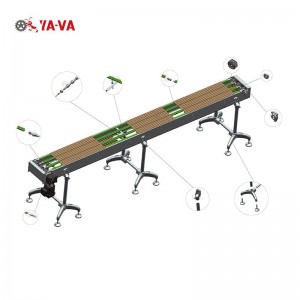
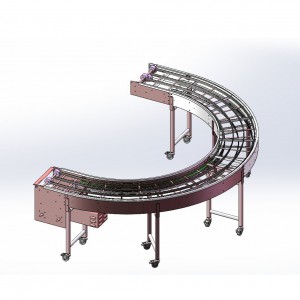







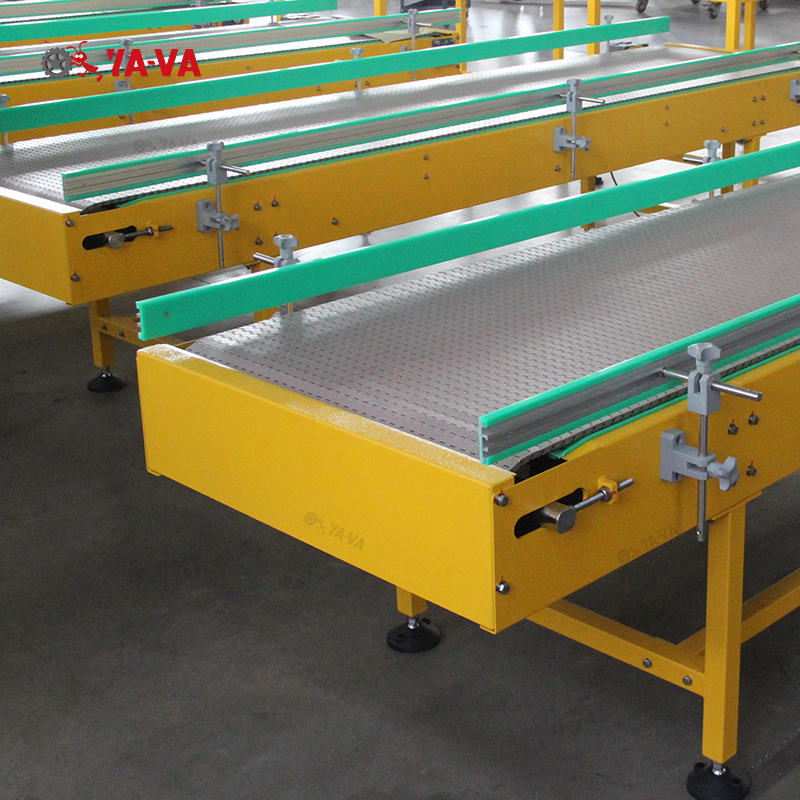
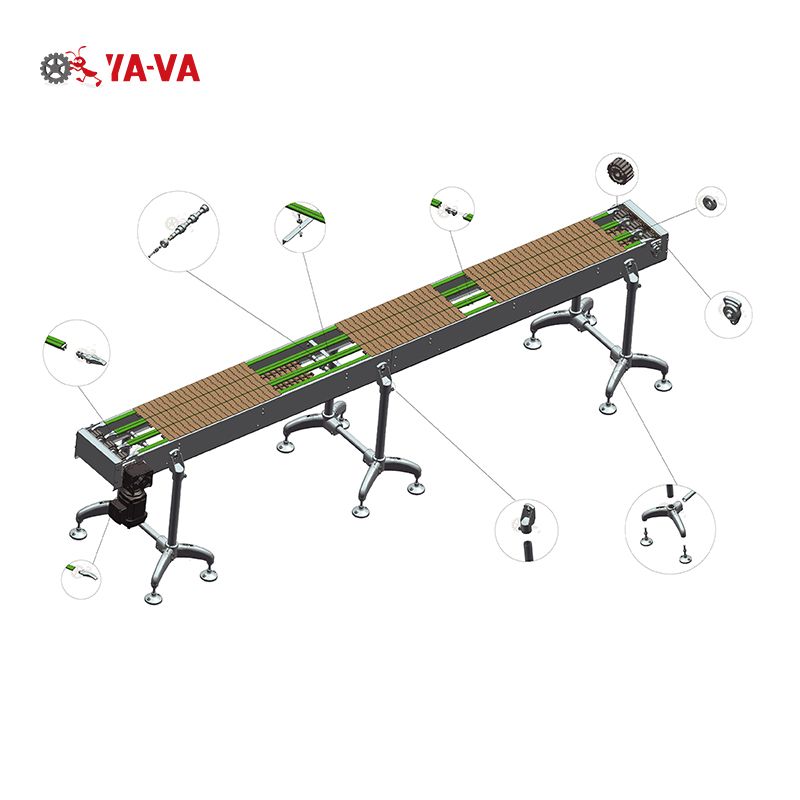 Plastic Curve Chain Conveyor Flat Top Chain Conveyor
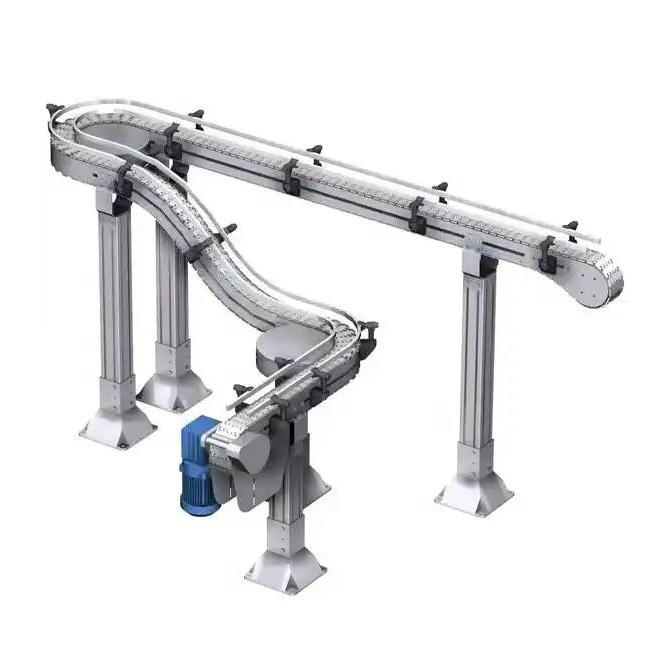 YA-VA Flex Chain Conveyor System
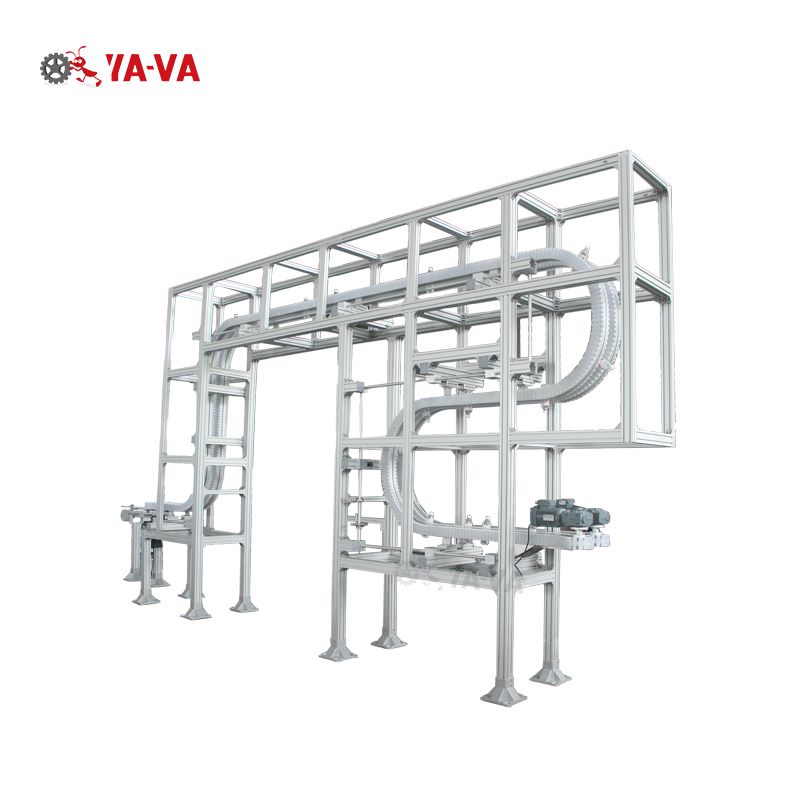 YA-VA wedge conveyor system lift
 conveyor parts--chain guide profile
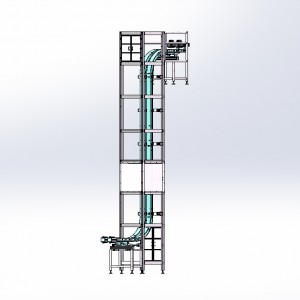 Elevating Lowering and Orientation gripper conveyor system


