- No.1068, Nanwan Rd, Kunshan city 215341, Jiangsu Province, P. R. China
- info@ya-va.com
- +86 18017127502
Featured Tire & Rubber Modular Systems
Continuous, non-marking material transfer units designed for rubber extrusion lines, cooling baths, and tire carcass handling.
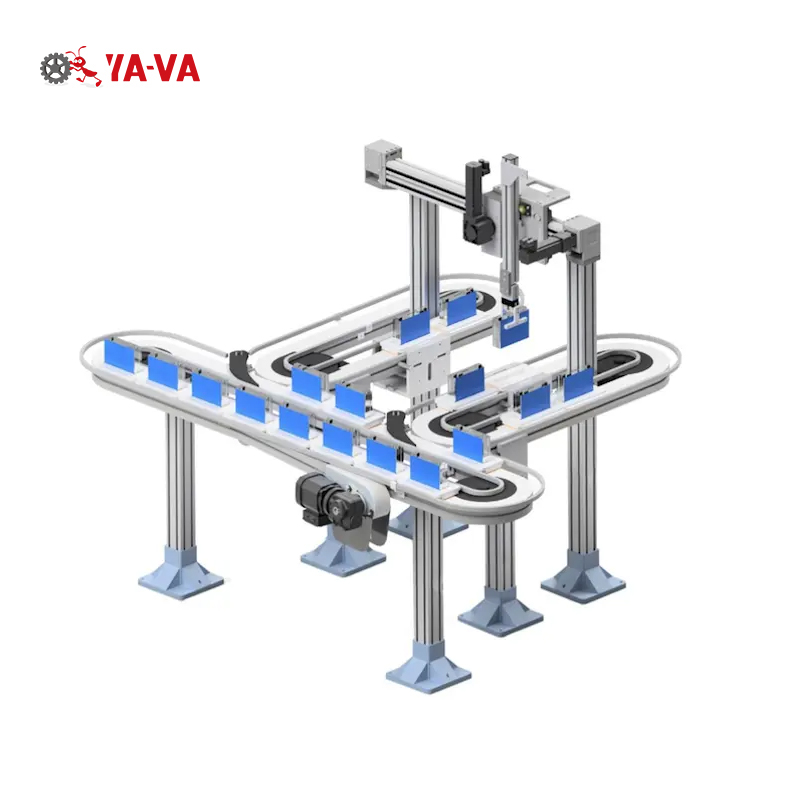
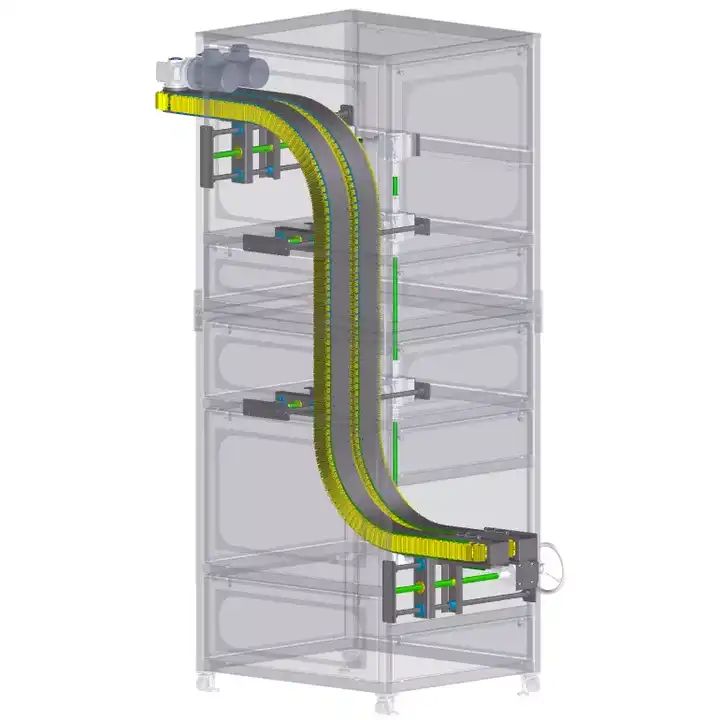
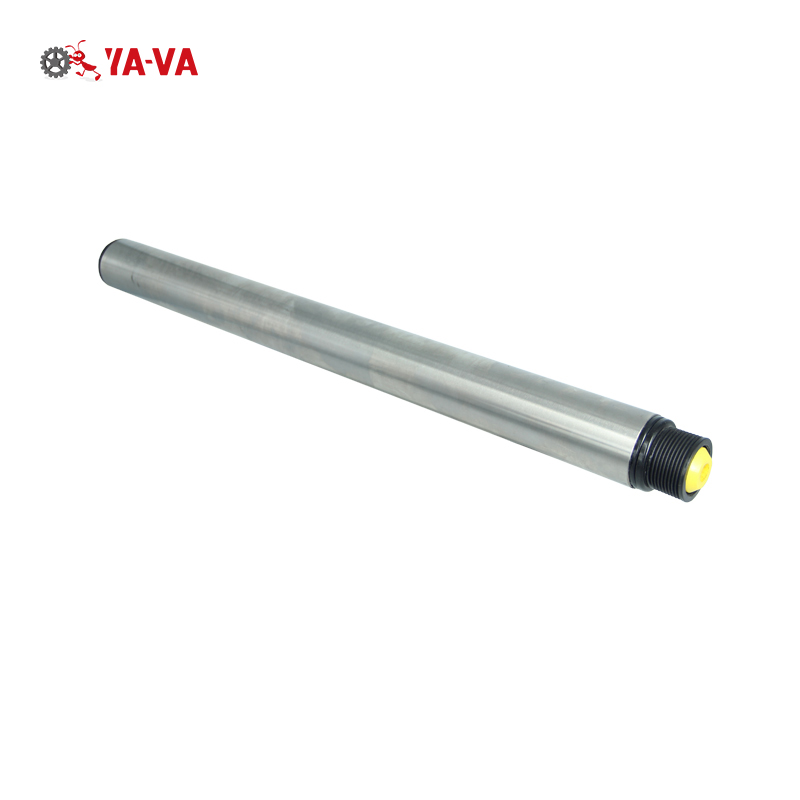
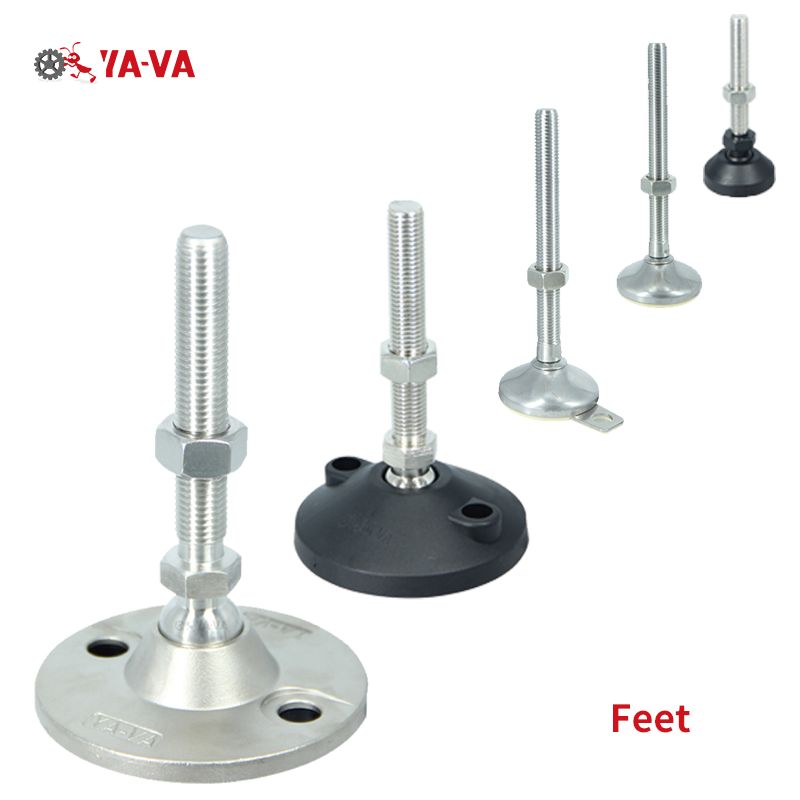
State of Tire & Rubber Conveyor Manufacturing
Navigating complex polymer handling, high thermal stress, and modern automated vulcanization logistics.
Thermal Resilience
Engineered acetal (POM) and high-density polypropylene (PP) components withstand curing press discharge radiant heat up to 120°C without elongation or structural loss.
Non-Stick Surface Matrix
Specialized low-surface-energy link textures prevent hot uncured rubber, treads, and green tire compounds from adhering or marring carcass integrity.
Positive Sprocket Drive
Eliminates belt tracking drift, edge fraying, and tension fatigue common with conventional rubber belts under extreme high-torque tire line loads.
The global tire and rubber processing sector is undergoing a profound structural metamorphosis. As automotive original equipment manufacturers (OEMs) demand higher dimensional uniformity, stringent rolling resistance parameters, and electric vehicle (EV) tailored tires, tire fabrication plants cannot tolerate intralogistics bottlenecks. Contemporary tire production relies heavily on uninterrupted raw rubber compound movement, multi-tier cooling loops, precision tread extrusion, automated green tire buffering, curing mold distribution, and final tire uniformity sorting. Within this demanding framework, traditional vulcanized rubber and PVC conveyor belts present recurring downtime liabilities: compound adhesion, chronic belt tracking error, oil and sulfur mist chemical breakdown, and catastrophic belt delamination.
Consequently, engineering procurement teams are turning toward premier modular conveyor manufacturers for tire & rubber industry infrastructure. Modern modular conveyor architectures employ interlocking polymer links assembled in a bricklay pattern, driven by precision-machined thermoplastic or stainless sprockets. This positive-drive mechanism eliminates edge slippage, eliminates tracking corrections, and resists tensile degradation caused by continuous hot water cooling baths, lubricants, and mold-release sprays. By partnering with advanced conveyor manufacturers who understand rubber polymer rheology, tire plants achieve near-zero unscheduled downtime, elevated operational cleanliness, and seamless Industry 4.0 sensor integration.
Key In-Line Tire Manufacturing Application Scenarios
Modular plastic belts and heavy-duty flexible slat conveyors perform vital functions across every operational zone of a state-of-the-art tire and industrial rubber plant:
| Production Phase | Critical Operational Challenge | Modular Conveyor Engineering Solution | Productivity Gain |
|---|---|---|---|
| Tread & Sidewall Extrusion Cooling | Immersion in water tanks, shrink deformation, hot compound adhesion, heavy longitudinal pull. | Perforated open-grid modular belts (flush grid) for rapid water drainage, high tensile modulus, low-adhesion polymers. | Eliminates tread distortion; boosts cooling heat-transfer efficiency by 34%. |
| Green Tire Assembly & Buffering | Fragile unvulcanized carcass, risk of bead deformation, zero tolerance for surface marking or scuffing. | Flat-top anti-static modular belts and low backpressure roller-top belts for zero-pressure accumulation. | Zero carcass out-of-round deformation; lowers green scrap rates below 0.05%. |
| Curing Press Infeed & Discharge | High radiant temperatures, residual heat up to 120°C-150°C, lubricant and release agent exposure. | Heat-stabilized POM or reinforced PA links with stainless steel hinge pins; flame-retardant resins. | Resists thermal embrittlement; provides continuous post-cure take-off without melt marks. |
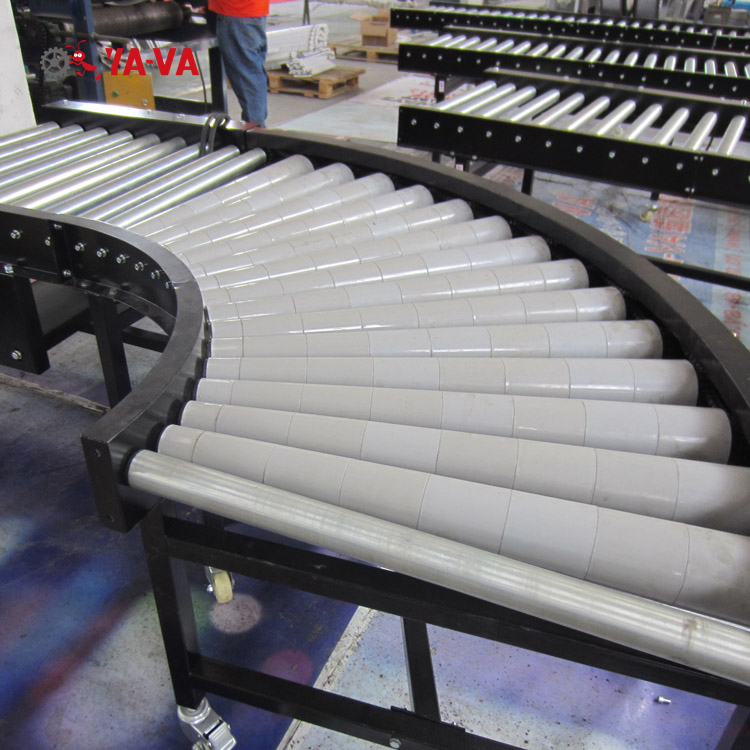
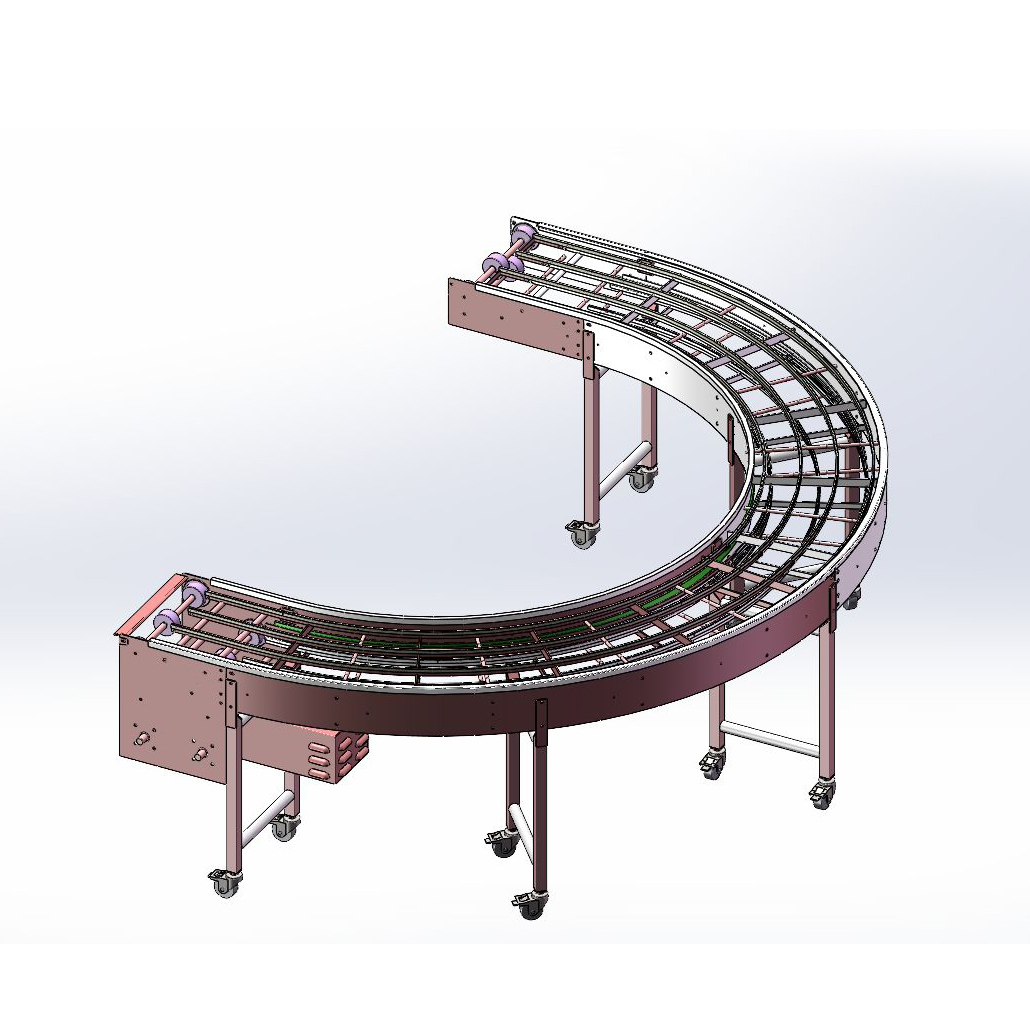
| Inspection, X-Ray & Uniformity (TUG) | Precision tire centering, high dynamic friction during spin tests, complex sorting and 90° transfers. | Sideflexing modular chains, powered roller merges, multi-strand flat-top turn conveyors. | Smooth high-speed orientation; 100% inline barcode and RFID scanning reliability. |
Extrusion Take-Off and Water Cooling Tanks
Upon exiting the multi-cavity extruder head, continuous tread and sidewall slabs require rapid, controlled cooling to arrest post-die swell and stabilize dimensional tolerances. Modular conveyor belts engineered with open-grid geometries (up to 40% open surface area) allow maximum water penetration and turbulent air impingement. Unlike conventional rubber belts that trap hot water beneath the rubber slab, modular belts promote symmetrical top-and-bottom heat dissipation. Furthermore, the positive tooth engagement of modular drive sprockets ensures consistent linear velocity without surging, preserving exact tread weight-per-meter specifications before automated cutters strike.
Green Tire Handling, Buffering, and Dynamic Transfer
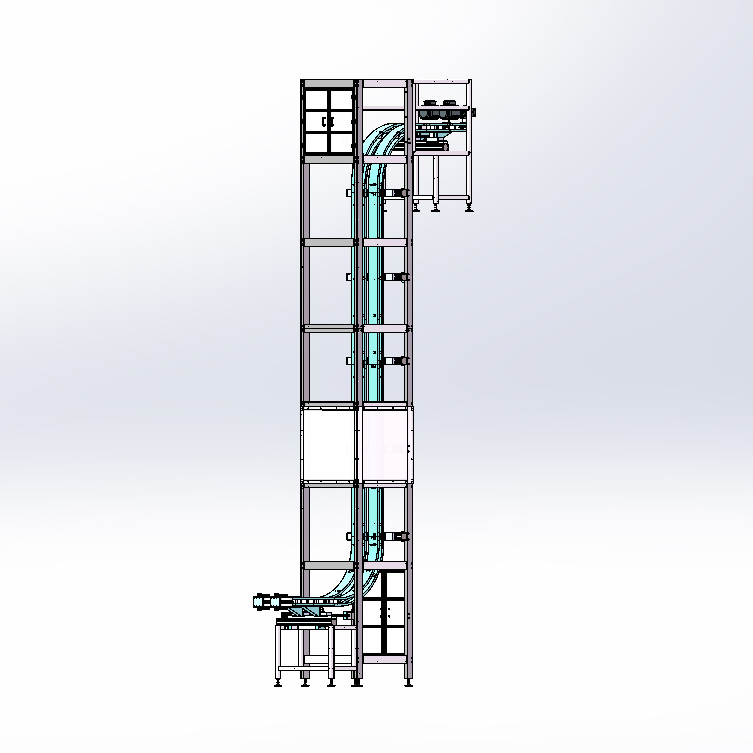
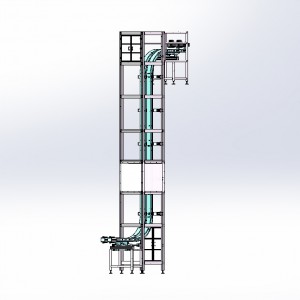
The green (uncured) tire represents the most fragile phase of production. Even minor carcass deflection, bead ring misalignment, or surface pinch marks introduced during transfer to the curing bank will result in structural tire rejection after vulcanization. Leading modular conveyor manufacturers construct specialized non-marking polypropylene and anti-static polyethylene link surfaces. Integrated low-friction turn curves, vertical wedge gripper conveyors, and continuous spiral elevators allow uncured tires to be transported between multi-story mezzanine building lines and curing press loading areas without manual handling or surface distress.
Curing Press Integration and Post-Cure Operations
At the mold unloading zone, newly vulcanized passenger car radial (PCR), truck and bus radial (TBR), or off-the-road (OTR) tires exit press cavities at temperatures frequently exceeding 140°C. Conveyor belts in this sector must survive prolonged contact with elevated thermal energy and mold release residue. Modular belts fabricated from chemically stabilized polyacetal (POM) prevent link warping and preserve pitch accuracy over millions of continuous thermal cycles. Modular link-based systems also allow selective single-link maintenance: should a foreign object or localized hot mechanical fault damage a link, technicians replace individual modular segments in minutes without uncoupling the entire conveyor span.
Future Technological Trajectories in Tire Intralogistics
The tire manufacturing landscape is rapidly embracing automated guided vehicles (AGVs), autonomous mobile robots (AMRs), and smart digital twin systems. Modular conveyor manufacturers are responding by embedding edge-computing IoT sensor pods inside conveyor drives and idler shafts. Real-time infrared thermography, laser run-out measurement, and vibration sensors monitor belt tracking, wear rates, and roller bearing health. Predictive maintenance algorithms signal maintenance shifts before link pin elongation or roller bearing failure can trigger line halts, driving Overall Equipment Effectiveness (OEE) past 92% across Tier-1 tire plants.
Our Strength
We are an independent company that has developed, produces and also maintains the conveyor system to ensure that our customers receive the most cost effective solutions available today.

+300 employees

3 operating units

Represented in +30 countries

+1000 projects per year

About Us
YA-VA is a leading high-tech company providing intelligent conveyor solutions.
And it consists of Conveyor Components Business Unit; Conveyor Systems Business Unit; Overseas Business Unit (Shanghai Daoqin International Trading Co., Ltd.) and YA-VA Foshan Factory.
Focusing on engineering R&D for more than 20 years, YA-VA continues to lead the modular conveyance sector with tailored solutions for high-capacity rubber, tire, automotive component, and specialized heavy goods production environments.

CHAIN CONVEYORS
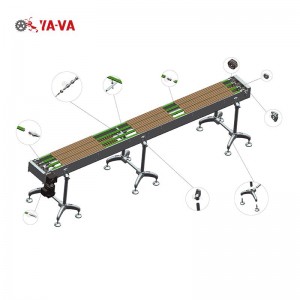
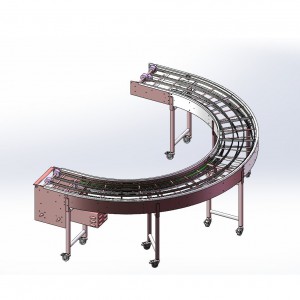
Flexible slat chain conveyor products lines cover a wide range of applications. These multiflexing conveyor systems use plastic chains in many configurations to transport complex profiles, rubber blocks, tires, and packaged goods seamlessly across elevations and sharp radii.
Feature Products
More than 20 years focusing on transportation machinery R&D development and manufacturing. In the future, stronger and bigger in the industry scale and brand.


Engineering Excellence in Rubber Compounding & Vulcanization
In-depth technical analysis for plant managers, system integrators, and conveyor design engineers.
Overcoming High Friction and Chemical Attack in Tire Facilities
Rubber compounding environments represent one of the most abrasive and chemically aggressive production atmospheres in industrial manufacturing. Carbon black powders, silica fillers, process oils (aromatic and naphthenic plasticizers), zinc oxide, and vulcanizing accelerators saturate the immediate processing airspace. When these substances settle on ordinary rubber or urethane fabric-ply belts, severe chemical degradation follows. Oils permeate the belt matrix, creating blisters, edge curling, and delamination.
By contrast, high-grade modular conveyor manufacturers for tire & rubber industry plants supply links molded from homopolymer polyacetal (POM), polyketone (PK), and polypropylene (PP) formulations that are completely inert to processing plasticizers and carbon black abrasion. Polyketone links, in particular, exhibit remarkable chemical resilience combined with superior impact resistance, outlasting conventional belts by up to four times in masterbatch cooling feed loops.
Energy Efficiency and Total Cost of Ownership (TCO) Optimization
Energy consumption across pneumatic and motorized tire plant conveyors represents a substantial operational cost. Traditional friction-driven flat rubber belts require high pre-tensioning to prevent drive pulley slippage under heavy tire bundles. This massive tension creates high radial side loads on drive bearings, increasing motor torque requirements and accelerating motor burnout.
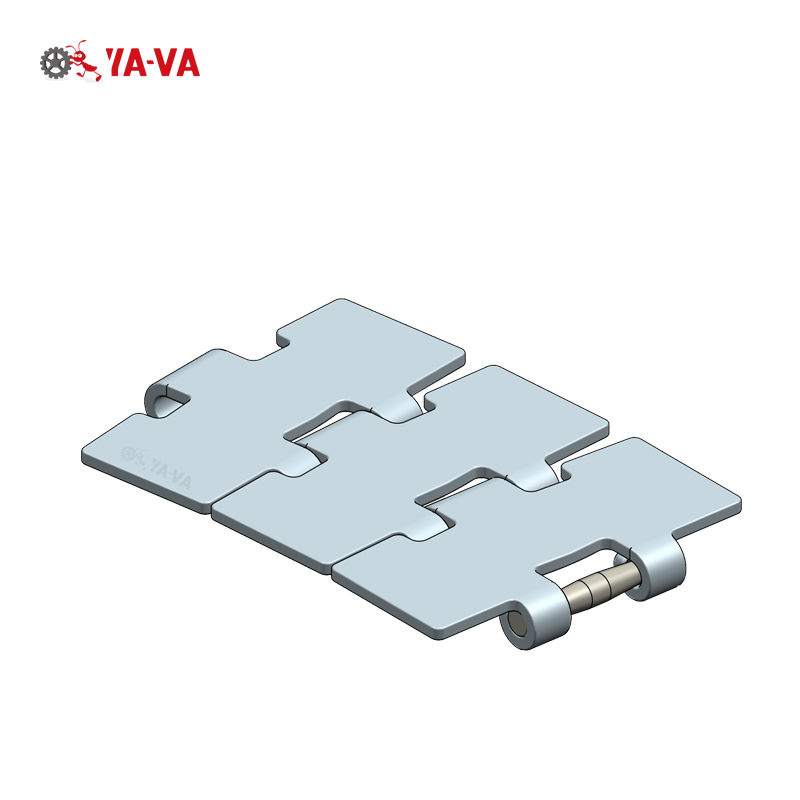
Modular plastic belts function on a positive mechanical engagement principle. Sprocket teeth interlock directly into belt hinge pockets, demanding minimal catenary sag tension. As a result:
- Drive Motor Energy Savings: Reduced friction and lower operating tension enable system designers to downsize motor drives by 20% to 35%, significantly reducing overall electrical consumption.
- Zero Pre-Tensioning Fatigue: Drive shafts, pillow blocks, and internal framework avoid structural fatigue, extending component lifespan across 24/7 continuous annual runtimes.
- Rapid Module Replacement: When localized impacts occur, damaged individual modules are snapped out and replaced within ten minutes using simple hand tools, completely avoiding the costly vulcanization splicing crews required by traditional continuous belts.
Noise Reduction and Operator Ergonomics
Modern tire manufacturing facilities emphasize ISO 45001 occupational health and environmental safety. Heavy steel slat conveyors and unshielded steel roller lines generate significant acoustic noise, frequently exceeding 85 dBA during high-speed tire sorting and divert cycles. By deploying self-lubricating polymer modular chains running on ultra-high-molecular-weight polyethylene (UHMW-PE) wear strips, conveyor acoustic signatures regularly drop below 68 dBA. This dampens reverberation inside cavernous curing and final inspection halls, creating safer, compliant work spaces for operators.
News and Information
Stay updated on our global exhibitions, technical conveyor design articles, and engineering milestones.
YA VA Looks Forward to Welcoming You in June 2026
Join our technical engineering delegation at upcoming global industrial exhibitions showcasing our latest generation of tire and rubber modular conveyance innovations.
View Details →
YA-VA Thailand Bangkok PROPAC
YA-VA Thailand Bangkok PROPACK exhibition concluded successfully two days ago. We would like to express our sincere gratitude to all our valued customers for visiting our booth. Your support is the driving force behind our progress. BOOTH NO:AY38 We sincerely invite...
View Details →What is the difference between chain and belt conveyor? How many types of conveyor chains are there?
What is the difference between chain and belt conveyor? Chain conveyors and belt conveyors are both used for material handling, but they differ in design, function, and applications: 1. Basic Structure Feature Chain Conveyor Belt Conveyor Driving Mechanism Uses...
View Details →Trusted Global Partners
Supplying world-class modular material handling components and conveyor modules to Fortune 500 manufacturing leaders.






Comprehensive Tire & Rubber Modular Product Portfolio
Complete OEM components, chain lines, gravity curves, and modular belts engineered for uncompromising reliability.