- No.1068, Nanwan Rd, Kunshan city 215341, Jiangsu Province, P. R. China
- info@ya-va.com
- +86 18017127502
Key Modular Conveying Equipment
Engineered specifically to meet the high demands, heavy loads, and complex routing requirements of the tire and rubber processing sectors.
Industrial Status & Trends: Conveyor Solutions in Tire Manufacturing
An in-depth look at how automation and modular design are transforming material handling in the global rubber and tire sectors.
The Evolving Landscape of Tire & Rubber Manufacturing
The tire and rubber manufacturing industry is undergoing a massive paradigm shift. Driven by the rapid expansion of the electric vehicle (EV) market, stricter environmental regulations, and the relentless pursuit of operational efficiency, manufacturers are forced to modernize their production facilities. Modern tires are high-tech products with complex structures, consisting of multiple rubber compounds, steel cords, and synthetic fibers. Consequently, handling these components throughout the production line requires high precision, absolute reliability, and extreme adaptability.
Historically, tire factories relied on traditional fabric belt conveyors, heavy roller systems, and manual carts to move raw materials, green tires, and finished products. However, these systems often struggled with the sticky nature of uncured rubber, high temperatures during vulcanization, and the massive weight of heavy-duty OTR (Off-the-Road) tires. Today, modular conveyor systems have emerged as the industry standard, offering unparalleled flexibility, durability, and integration capabilities that align perfectly with Industry 4.0 standards.
Why Modular Conveyor Systems are Essential for Modern Tire Factories
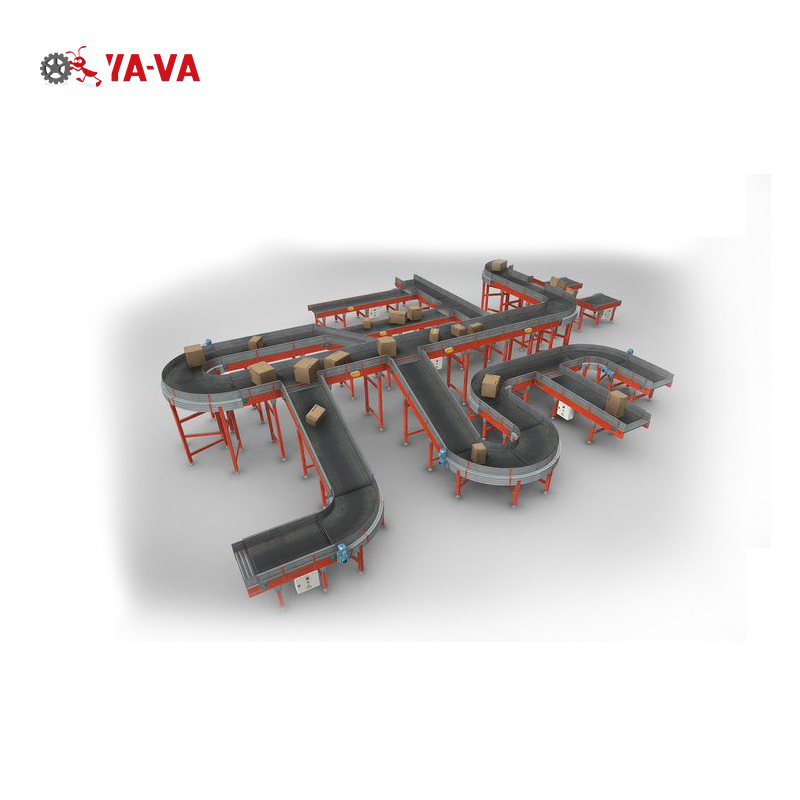
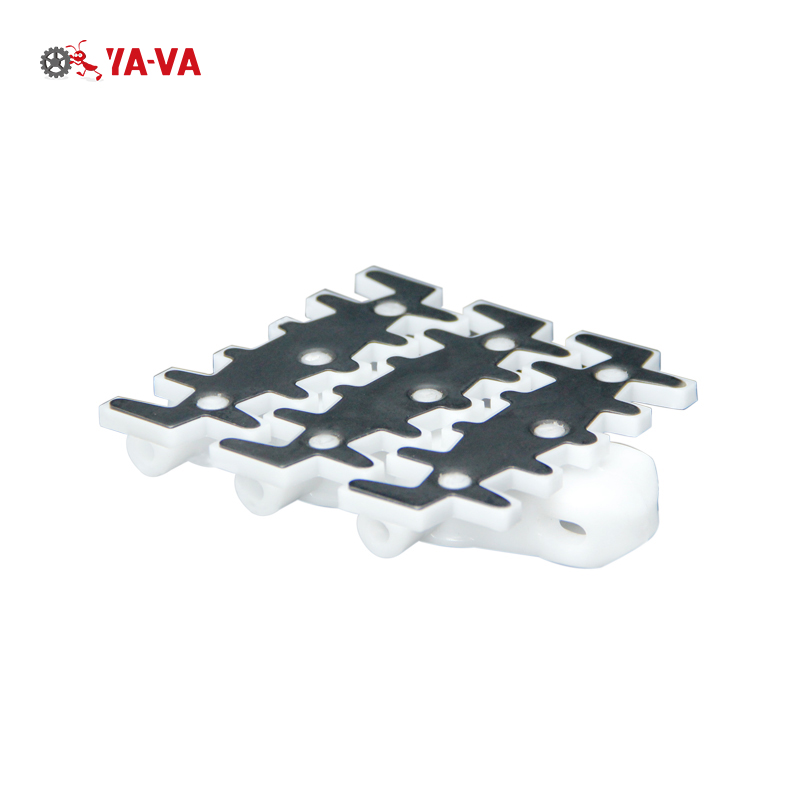
Unlike traditional continuous belts, modular conveyors utilize interlocking plastic or metal modules driven by sprockets. This design eliminates tracking issues, simplifies repair processes (as only damaged modules need replacement rather than the entire belt), and allows for precise positioning of materials, which is crucial for automated robotic assembly lines.
Key Challenges in Tire and Rubber Conveying Systems
To understand the value of modular conveyors, one must first analyze the unique challenges of the tire manufacturing environment:
1. Sticky and Abrasive Materials: In the compounding and extrusion phases, uncured rubber is highly adhesive. It tends to stick to conventional conveyor belts, leading to material loss, contamination, and frequent cleaning shutdowns. Modular plastic belts with non-stick surfaces and open grid designs minimize contact area and release the rubber easily.
2. High Temperatures: During extrusion, calendering, and curing, rubber components are subjected to extreme heat. A conveyor belt must withstand temperatures exceeding 100°C (and sometimes up to 180°C) without losing structural integrity or stretching. Advanced modular belts made from high-temperature resistant polymers or stainless steel chains are engineered to endure these thermal stresses.
3. Heavy and Non-Uniform Loads: From large raw rubber bales at the beginning of the line to huge commercial vehicle tires at the end, conveyors must handle varying weights and shapes. Modular systems offer high load-bearing capacities and can easily handle heavy impacts without sagging or slipping.
4. Strict Precision Requirements: In the tire building phase, components like tread, ply, and steel belts must be aligned with millimeter-level precision. Any slippage on the conveyor belt can ruin the geometry of the "green tire" (uncured tire), leading to defects and safety hazards. Positive sprocket-driven modular belts ensure zero slippage and highly synchronized movement.
Deep-Dive Application Scenarios
How modular conveyor systems optimize different stages of the tire production workflow.
Scenario 1: Extrusion and Cooling Lines
After the rubber compounding stage, the rubber is extruded into continuous strips of tread and sidewall profiles. These profiles are hot, soft, and extremely sensitive to deformation. The conveyor system must transport them through cooling water baths or air-cooling tunnels.
Modular plastic belts with open-grid designs allow cooling water and air to circulate freely around the extruded profile, ensuring uniform cooling. Because the belt is driven by sprockets, it maintains constant tension and speed, preventing the hot, elastic rubber from stretching or shrinking, which would otherwise alter the tire's final dimensions.
Scenario 2: Component Cutting and Booking
Once cooled, the tread and sidewall profiles are cut to specific lengths for different tire sizes. These cut pieces must be transported to "booking" stations or directly to tire building machines.
Here, modular conveyors with high-grip or textured surfaces are used to prevent the cut pieces from sliding during acceleration or incline transport. The modular nature allows for easy integration of lateral transfer systems, enabling 90-degree transfers without disturbing the alignment of the cut rubber components.
Scenario 3: Green Tire Handling and Storage
A "green tire" is the assembled, uncured tire. It is highly fragile and susceptible to deformation. Any external pressure or improper handling can ruin the tire's uniformity, making it scrap even before curing.
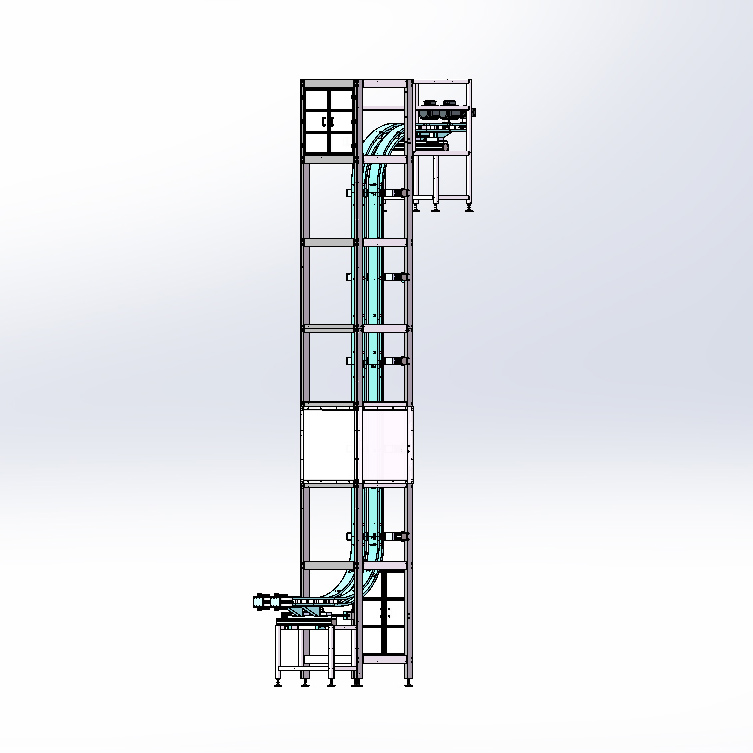
Modular gripper conveyors and specialized slat conveyors are deployed to gently transport green tires vertically and horizontally. Gripper conveyors securely hold the green tire by its bead without applying excessive force, transporting it to the curing press area. The smooth, positive motion of modular systems prevents shocks and vibrations that could alter the tire's shape.
Scenario 4: Curing Press Feeding and Take-Away
In the curing department, green tires are loaded into molds and subjected to heat and pressure. After curing, the hot, finished tires (often around 150°C) are ejected from the press.
Modular conveyors made from heat-resistant polyamide (PA) or steel chains receive the hot tires directly from the press. These conveyors must handle the thermal shock and transport the tires to the cooling and inspection areas. The open structure of the modular belt helps dissipate heat quickly, protecting both the conveyor components and the newly cured tire.
Scenario 5: Final Inspection and Sorting
Before packaging and shipping, every tire undergoes rigorous inspection, including visual checks, X-ray scanning, and force variation testing. Tires must be sorted based on test results and routed to specific storage destinations.
Modular roller-top belts (which embed small rollers within the modular belt surface) are highly effective here. They allow for multi-directional sorting, merging, and diverting without the need for complex pusher arms. This reduces the risk of marking or damaging the finished tire surface and significantly increases sorting throughput.
Scenario 6: Warehouse and Logistics Integration
Tire warehousing presents unique challenges due to the round shape and stackability of tires. Modular conveyors interface seamlessly with Automated Storage and Retrieval Systems (AS/RS) and palletizing robots.
Heavy-duty modular plastic belts handle high-volume tire stacks, transferring them smoothly to shipping docks. The low maintenance requirements of modular belts ensure that the final logistics phase operates 24/7 without unexpected downtime.
Our Strength
We are an independent company that has developed, produces and also maintains the conveyor system to ensure that our customers receive the most cost effective solutions available today.





About Us
YA-VA is a leading high-tech company providing intelligent conveyor solutions.
Our integrated organization consists of the Conveyor Components Business Unit, Conveyor Systems Business Unit, Overseas Business Unit (Shanghai Daoqin International Trading Co., Ltd.), and the YA-VA Foshan Factory.
For more than 20 years, we have focused on transportation machinery R&D development and manufacturing. Looking to the future, we aim to grow stronger and larger in industry scale and brand reputation, delivering cutting-edge automation solutions to global manufacturing sectors including tire, rubber, automotive, and food packaging.
Technological Trends & Future Outlook
Exploring the next generation of smart conveying technologies shaping the rubber industry.
1. Integration of Smart Sensors and IoT
The integration of the Internet of Things (IoT) into modular conveyor systems is a game-changer. Modern conveyor systems in tire plants are no longer passive mechanical assets; they are intelligent, data-generating nodes. By embedding sensors directly into the conveyor frames and drive units, operators can monitor belt speed, temperature, motor load, and vibration in real-time. This data is analyzed using AI algorithms to predict component failures before they occur, scheduling maintenance during planned shutdowns and virtually eliminating catastrophic line stops.
2. Sustainable and Energy-Efficient Designs
Energy consumption is a major operational cost in tire manufacturing. Traditional heavy-duty conveyor systems require high-power motors to overcome friction and inertia. Modern modular conveyors solve this by using low-friction materials like POM (Polyoxymethylene) and optimizing the sprocket-to-belt engagement. Furthermore, smart control systems can slow down or temporarily pause conveyors when no material is detected on the line, significantly reducing electricity consumption and wear-and-tear.
3. High-Performance Wear-Resistant Polymers
As tire designs evolve, the chemical compositions of rubber compounds become more complex, often incorporating silica and other abrasive additives. Conveyor belts must resist these chemical agents and the physical abrasion caused by continuous contact. The development of advanced polymer blends for modular belt links ensures long service life, even when exposed to harsh release agents, processing oils, and abrasive rubber particles.
Commercial and Economic Value: ROI Analysis
Investing in high-quality modular conveyor systems yields substantial financial returns for tire manufacturers:
- Reduced Downtime: Traditional belts require long hours (or even days) to vulcanize or splice when damaged. A modular belt can be repaired in minutes by simply replacing a few links using basic tools. This drastically reduces the cost of lost production.
- Lower Maintenance Costs: The positive sprocket drive eliminates the need for complex belt tensioners and tracking systems. This reduces the labor hours required for routine adjustments and minimizes wear on bearings and motors.
- Improved Product Quality: By preventing the deformation of uncured rubber profiles and green tires, modular conveyors directly reduce scrap rates, ensuring that more tires pass final quality control checks on the first run.
- Enhanced Workplace Safety: Fully enclosed modular chains and automated transfers eliminate manual lifting and reduce the risk of worker injuries, lowering insurance costs and improving overall factory morale.
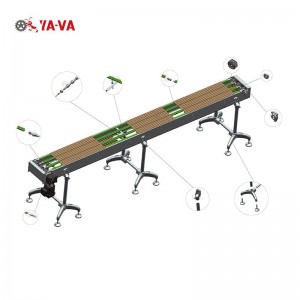
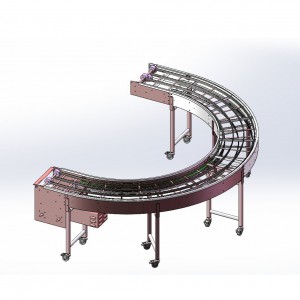
Featured Tire & Rubber Conveyor Products
More than 20 years focusing on transportation machinery R&D development and manufacturing. Explore our comprehensive portfolio of high-performance systems.


News & Information
Stay updated with the latest events, product releases, and technical insights from YA-VA.
YA VA Looks Forward to Welcoming You in June 2026
Join us at the upcoming international trade fairs where we will showcase our latest advancements in intelligent modular conveyor systems, heavy-duty components, and automated sorting technologies.

YA-VA Thailand Bangkok PROPAC
YA-VA Thailand Bangkok PROPACK exhibition concluded successfully. We would like to express our sincere gratitude to all our valued customers for visiting our booth. Your support is the driving force behind our progress.
Chain vs Belt Conveyor: Differences & Types
What is the difference between chain and belt conveyor? Chain conveyors and belt conveyors are both used for material handling, but they differ in design, function, and applications. Learn which system best fits your factory layout.
Our Cooperative Partners
Trusted by leading global brands in automotive, tire, packaging, and logistics industries.