- No.1068, Nanwan Rd, Kunshan city 215341, Jiangsu Province, P. R. China
- info@ya-va.com
- +86 18017127502
Premium Beverage Conveying components
Commercial & Industrial Status of Conveying in the Beverage Sector
The global beverage industry is witnessing unprecedented growth, driven by shifting consumer preferences, rapid urbanization, and a surging demand for packaged drinks. From carbonated soft drinks and juices to bottled water, craft beers, and dairy beverages, manufacturing plants are pushed to run at higher speeds while maintaining absolute product safety. To keep pace with these dynamics, beverage manufacturers must optimize their packaging and bottling lines for maximum efficiency, safety, and reliability. At the heart of these modern production lines is the plastic conveyor belt.
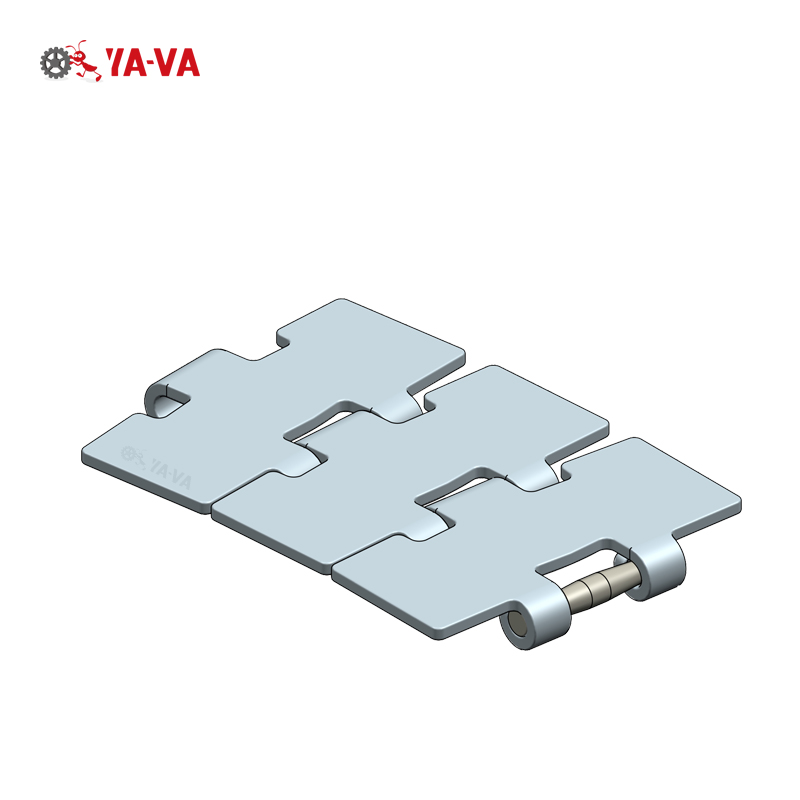
Specifically engineered to meet the stringent demands of food and beverage processing, plastic modular belts and flexible chains have revolutionized material handling. Unlike traditional metal belts or basic flat PVC belts, plastic alternatives offer superior corrosion resistance, lower weight, reduced noise levels, and exceptional flexibility. In an industry where plant downtime is valued at thousands of dollars per minute, the durability and quick-repair capabilities of modular plastic belts have made them the standard choice for bottling plants worldwide.
Furthermore, energy efficiency has become a critical KPI for major beverage brands. Lightweight thermoplastic belts require significantly less motor power to drive, directly translating to lower energy consumption and a reduced carbon footprint. As global regulations on carbon emissions tighten, the adoption of advanced plastic modular belts is no longer just an operational decision, but a strategic sustainability initiative.
Our Strength
We are an independent company that has developed, produces and also maintains the conveyor system to ensure that our customers receive the most cost effective solutions available today.





About Us
YA-VA is a leading high-tech company providing intelligent conveyor solutions. And it consists of Conveyor Components Business Unit;Conveyor Systems Business Unit; Overseas Business Unit (Shanghai Daoqin International Trading Co., Ltd.) and YA-VA Foshan Factory.
Read MoreDeep Application Scenarios in Beverage Production Lines
Beverage manufacturing is a multi-stage process, with each stage presenting unique mechanical challenges. Plastic conveyor belts are uniquely suited to adapt to these varied environments due to the diverse properties of engineering plastics.
1. Depalletizing and Feed-In Zones
At the start of the line, empty containers (glass bottles, aluminum cans, or PET preforms) are unloaded from pallets. This stage requires wide, robust modular belts capable of handling high-mass accumulation. Heavy-duty plastic modular belts provide a stable, flat surface that prevents empty, lightweight containers from tipping over. Low-friction materials ensure that containers slide smoothly onto single-file lines without crushing or jamming.
2. Rinsing, Filling, and Capping
This is the most critical zone regarding hygiene and precision. During filling, liquids are prone to spilling, creating sticky or corrosive environments. Traditional metal chains rust or require heavy lubrication, which can contaminate the product. Plastic flat top chains made of Polyacetal (POM) are highly resistant to organic acids, sugars, and cleaning chemicals. They run smoothly without external lubricants, ensuring a sterile environment. Furthermore, side-gripper chains are used to invert bottles for rinsing and air-blowing before they reach the filling nozzles.
3. Pasteurization and Cooling Tunnels
In beer and juice production, products must undergo pasteurization, involving exposure to hot water sprays followed by cooling. This rapid temperature change requires belts with excellent thermal stability. Polypropylene (PP) modular belts with open-grid designs allow hot water and air to circulate freely around the containers, ensuring uniform temperature distribution. The open area also facilitates rapid drainage, preventing water pooling and reducing the risk of biological growth.
Featured Beverage Conveying Systems
More than 20 years focusing on transportation machinery R&D development and manufacturing. In the future, we continue to grow stronger and larger in industry scale and brand reputation.

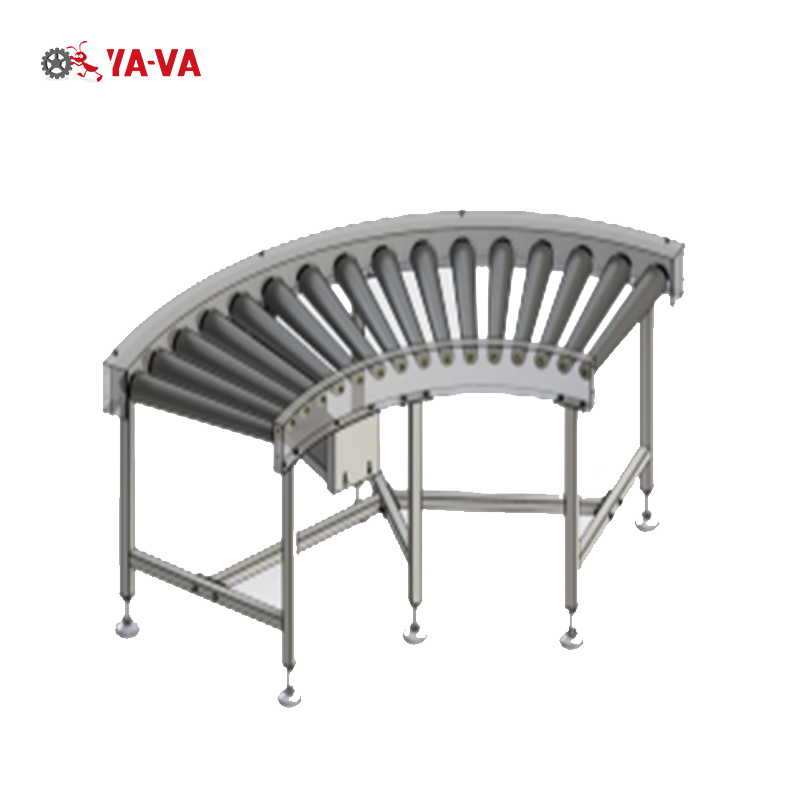
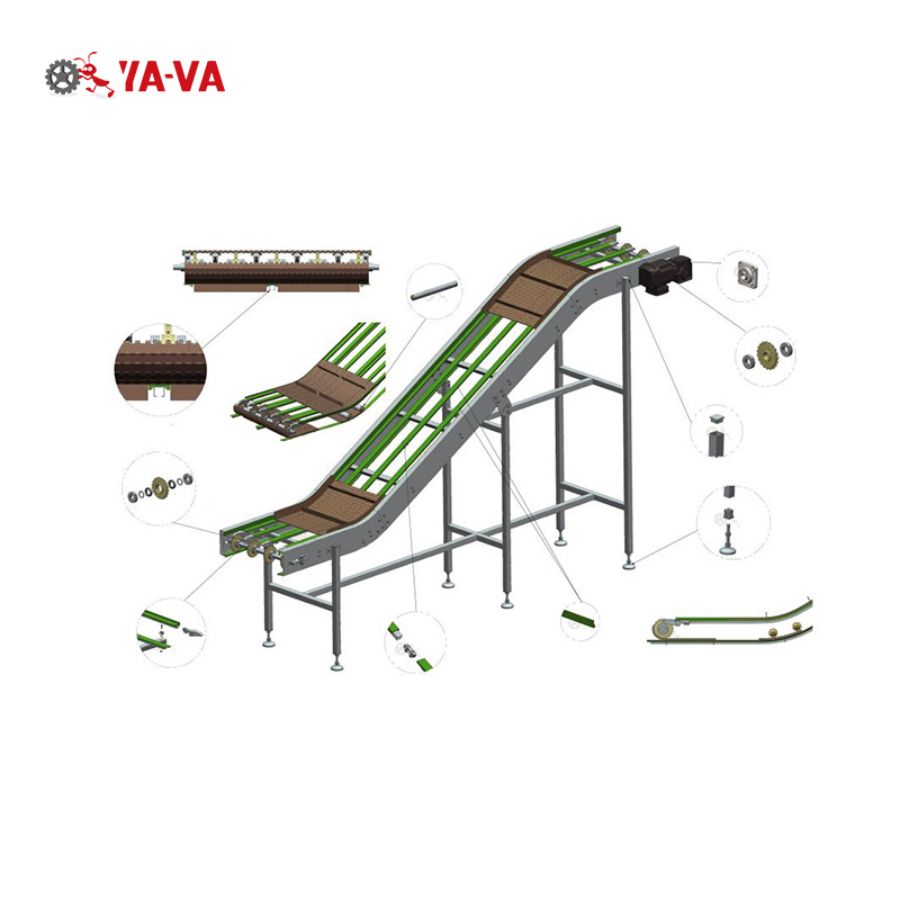
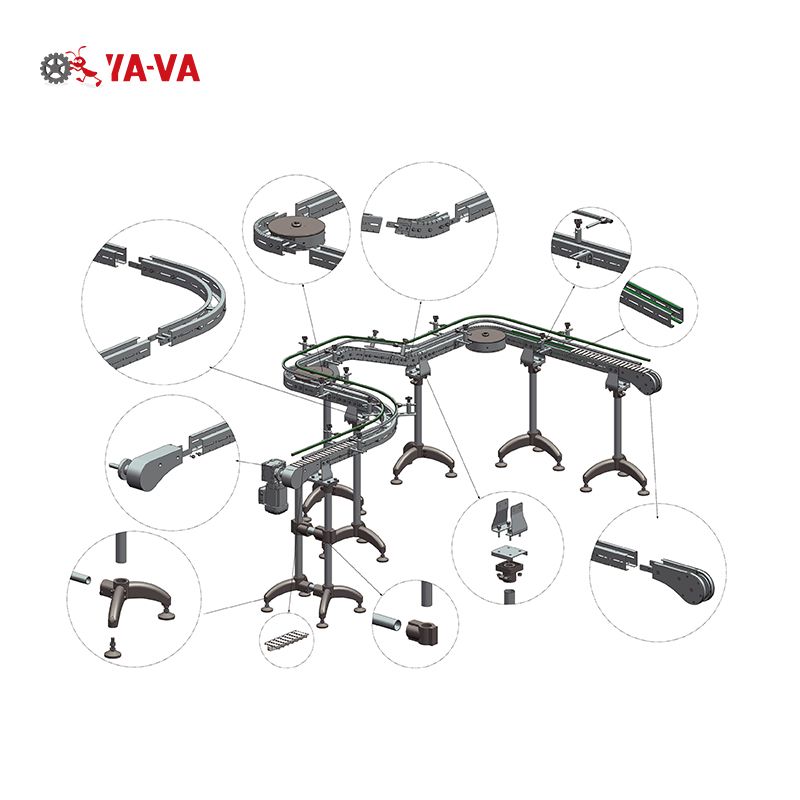
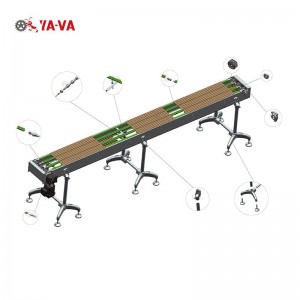
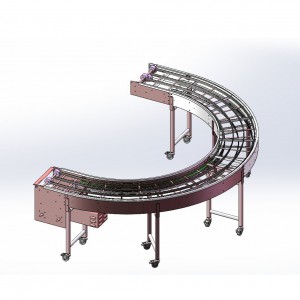
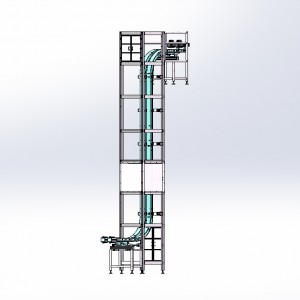
CHAIN CONVEYORS
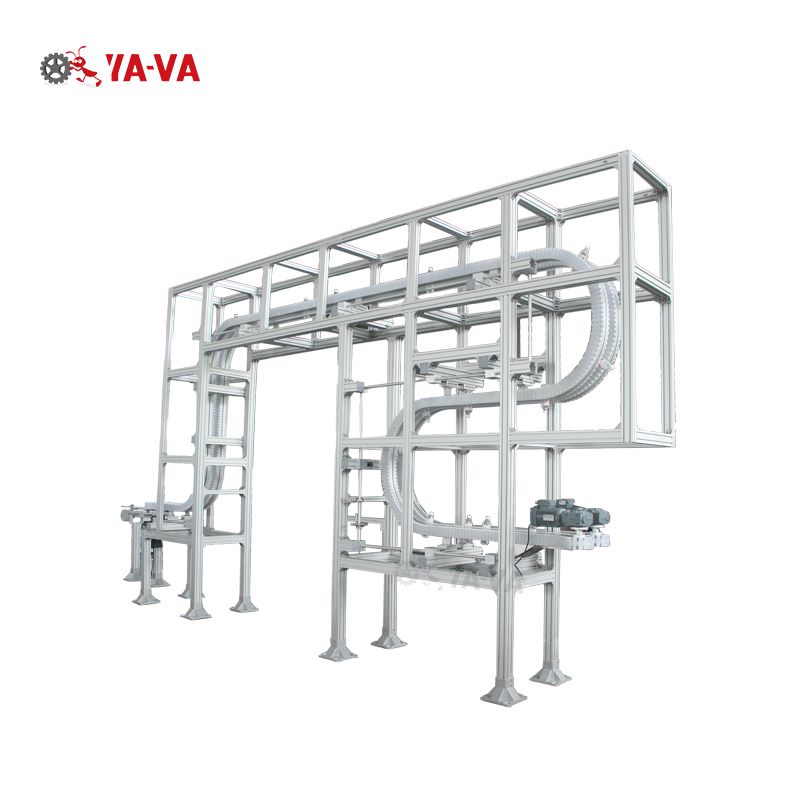
Flexible slat chain conveyor product lines cover a wide range of applications. These multiflexing conveyor systems use plastic chains in many configurations...
Get in touch


Technological Advancements in Beverage Plastic Conveyor Belts
The transition from traditional metal belts to plastic modular systems represents a major leap in material science. Engineering plastics like Polyacetal (POM), Polypropylene (PP), and Polyethylene (PE) are formulated with specialized additives to withstand the harsh environments of beverage plants.
Low Back Pressure (LBP) Technology
In high-speed beverage production, accumulation zones are necessary to buffer products when downstream equipment slows down. When bottles accumulate on a standard belt, they rub against each other and the moving belt, creating line pressure. This pressure can cause PET bottles to deform, glass bottles to scuff or break, and cans to dent. Low Back Pressure (LBP) modular belts feature integrated rollers that rotate freely under the bottles when accumulation occurs. This dramatically reduces friction and line pressure, protecting the products and reducing the load on the conveyor motors.
Hygienic Design and Clean-in-Place (CIP) Systems
Hygiene is paramount in beverage production, particularly for dairy and fruit juice lines. Spilled product can lead to bacterial growth and contamination. Modern plastic conveyor belts are designed with open hinges and smooth surfaces that eliminate hard-to-reach crevices where bacteria can multiply. Additionally, materials are engineered to resist harsh chemical washdowns, including acidic and alkaline cleaning agents, without degrading.
Future Trends in Beverage Conveying: Industry 4.0 & Sustainability
As the beverage industry moves towards smart manufacturing, conveyor systems are evolving from simple mechanical components into intelligent, data-driven systems. This shift is driven by the need for predictive maintenance, energy optimization, and flexible manufacturing.
1. IoT-Enabled Smart Conveyors
By integrating sensors directly into the conveyor frame and utilizing smart plastic modules, manufacturers can monitor real-time metrics such as belt tension, temperature, and wear. This data is transmitted to centralized control systems or cloud platforms. AI algorithms analyze this data to predict when a belt component is nearing the end of its lifespan, allowing maintenance teams to schedule replacements during planned shutdowns, preventing costly unplanned downtime.
2. Eco-Friendly and Recyclable Materials
Sustainability is a core focus for major beverage brands. In response, conveyor manufacturers are developing modular belts using bio-based plastics or recycled resins. These materials offer the same mechanical performance as virgin polymers while significantly reducing the environmental footprint of the conveyor system. Furthermore, at the end of their lifecycle, these thermoplastic belts can be fully recycled, contributing to a circular economy.
3. Modular and Reconfigurable Layouts
Consumer demands are changing rapidly, requiring beverage manufacturers to frequently introduce new packaging sizes and shapes. Traditional, fixed conveyor lines are difficult and expensive to modify. Modular plastic conveyor systems, however, can be easily reconfigured. The snap-fit nature of modular belts allows lines to be lengthened, shortened, or rerouted with minimal effort and tools, providing the operational flexibility needed to adapt to changing market demands.
News & Information
YA VA Looks Forward to Welcoming You in June 2026
Stay tuned for our upcoming exhibitions and product showcases where we will present the latest innovations in plastic modular conveying systems...
View Details
YA-VA Thailand Bangkok PROPAC
YA-VA Thailand Bangkok PROPACK exhibition concluded successfully. We would like to express our sincere gratitude to all our valued customers for visiting our booth. Your support is the driving force behind our progress.
View DetailsWhat is the difference between chain and belt conveyor?
Chain conveyors and belt conveyors are both used for material handling, but they differ in design, function, and applications. Learn the structural and mechanism differences here.
View DetailsOur Partners