- No.1068, Nanwan Rd, Kunshan city 215341, Jiangsu Province, P. R. China
- info@ya-va.com
- +86 18017127502
Featured Conveyor Solutions for Tissue & Hygiene
Explore our core plastic belt conveyor product lines purpose-built for tissue paper mills, diaper production, and personal hygiene manufacturing environments.
Industry Status & Market Overview
Why Plastic Belt Conveyors Are Essential in Tissue & Hygiene Manufacturing
The global tissue and hygiene products market — encompassing facial tissue, bathroom tissue, diapers, feminine care, and adult incontinence products — is forecast to surpass $200 billion USD by 2030, driven by rising hygiene awareness, urbanization in emerging markets, and demographic aging trends worldwide.
Modern tissue and hygiene production facilities operate at extraordinary speeds, with some tissue converting lines exceeding 800 meters per minute. In these demanding environments, conventional metal conveyor chains introduce contamination risks, generate excessive noise, and require frequent lubrication — all unacceptable in cleanroom-adjacent production areas.
Plastic belt conveyor systems have emerged as the definitive standard for this sector, offering a compelling combination of hygiene compliance, low maintenance, lightweight construction, and chemical resistance that metallic alternatives simply cannot match.
Hygienic Design Compliance
FDA-approved, food-contact-safe polymer materials meet strict hygiene regulations for personal care and tissue product handling, eliminating contamination pathways at every transfer point.
High-Speed, High-Reliability Performance
Engineered to sustain continuous operation at elevated line speeds with minimal vibration — critical for protecting delicate tissue products and maintaining package integrity throughout the process chain.

Market Insight: Asia-Pacific dominates global tissue and hygiene product output, accounting for over 45% of worldwide production capacity. China, in particular, has seen a 12% compound annual growth rate in hygiene product manufacturing automation investment over the past five years — making it the world's fastest-growing market for advanced conveyor system integration.
Development Trends & Technology Directions
The plastic belt conveyor industry is undergoing rapid technological transformation, shaped by automation, sustainability mandates, and the push for zero-defect production.
AI-Integrated Smart Conveying
Next-generation conveyor systems embed IoT sensors and machine learning algorithms to enable predictive maintenance, real-time throughput optimization, and autonomous tension adjustment — reducing unplanned downtime by up to 40% in tissue manufacturing environments.
Sustainable & Recyclable Materials
Manufacturers are transitioning to bio-based and fully recyclable engineering polymers for belt and chain construction, responding to tightening environmental regulations and corporate sustainability commitments from major FMCG customers across Europe and North America.
Modular & Flexible Architecture
Demand for rapid line reconfiguration — driven by SKU proliferation in hygiene product portfolios — is accelerating adoption of modular plastic belt conveyor platforms that can be reconfigured in hours rather than days, with plug-and-play drive units and tool-free belt replacement.
Lubrication-Free & Dry-Running Systems
Tissue and nonwoven production environments demand fully dry-running plastic conveyor systems that eliminate oil contamination risks near absorbent product streams. Self-lubricating polymer compounds now extend mean-time-between-maintenance intervals to 25,000+ operating hours.
Compact Spiral & Vertical Integration
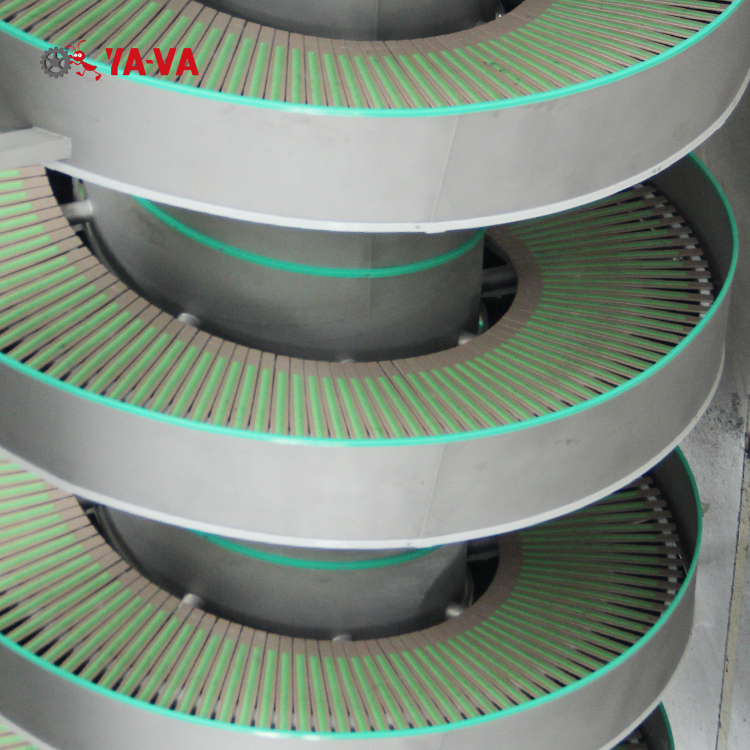
Space constraints in modern hygiene factories are driving the adoption of vertical spiral conveyor systems that maximize floor-space efficiency, enabling elevation changes of 3–8 meters within footprints as small as 2m², ideal for high-density tissue converting halls.
Global Supply Chain Localization
Post-pandemic supply chain resilience strategies are prompting multinational hygiene brands to partner with regional conveyor specialists capable of rapid delivery and local technical support — creating significant growth opportunities for Asia-based manufacturers with global reach.
Deep-Dive Application Scenarios
Plastic belt conveyor systems serve mission-critical functions at every stage of tissue and hygiene product manufacturing — from raw material handling to finished goods palletizing.
Tissue Roll Accumulation & Buffering
In tissue converting lines, plastic flat-top chain conveyors create dynamic accumulation buffers between converting machines and packaging units, absorbing speed differentials without product damage. The low-friction, gentle-contact surface prevents deformation of delicate tissue rolls at speeds exceeding 200 packs per minute.
Diaper & Absorbent Product Transport
Lightweight, low-noise plastic belt systems are the preferred choice for transporting finished diapers and absorbent hygiene products from folding machines to bagging lines. Modular belt surfaces prevent product skewing and maintain lane discipline across multi-lane packaging configurations.
Wet Wipes & Nonwoven Fabric Handling
Nonwoven substrates used in wet wipes and feminine care products require conveyor surfaces with controlled friction coefficients to prevent stretching. Specialty plastic chain pitches (45mm–150mm) provide precisely engineered surface contact patterns that protect material integrity throughout slitting, folding, and stacking operations.
Case Packing & Palletizing Infeed
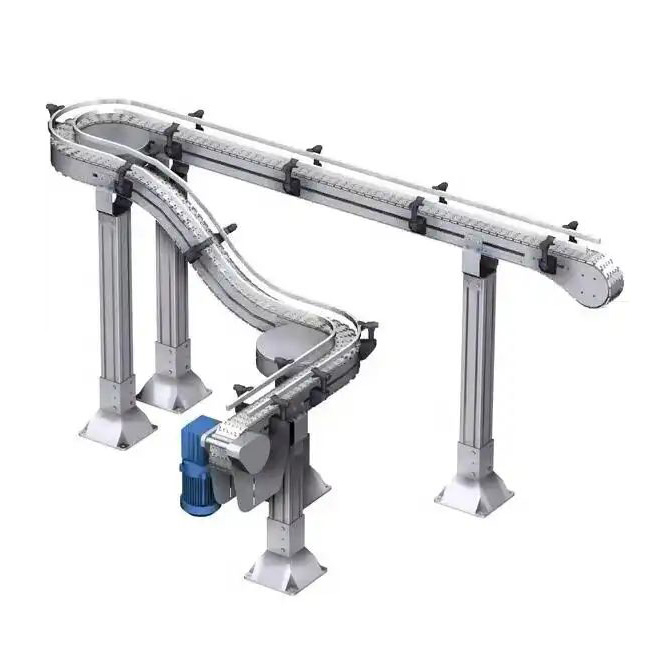
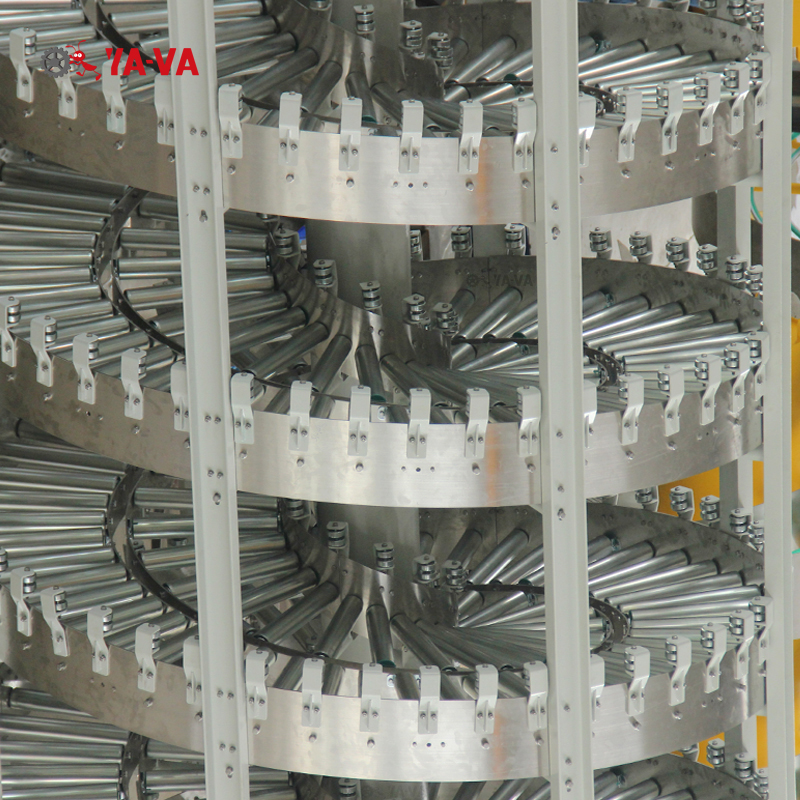
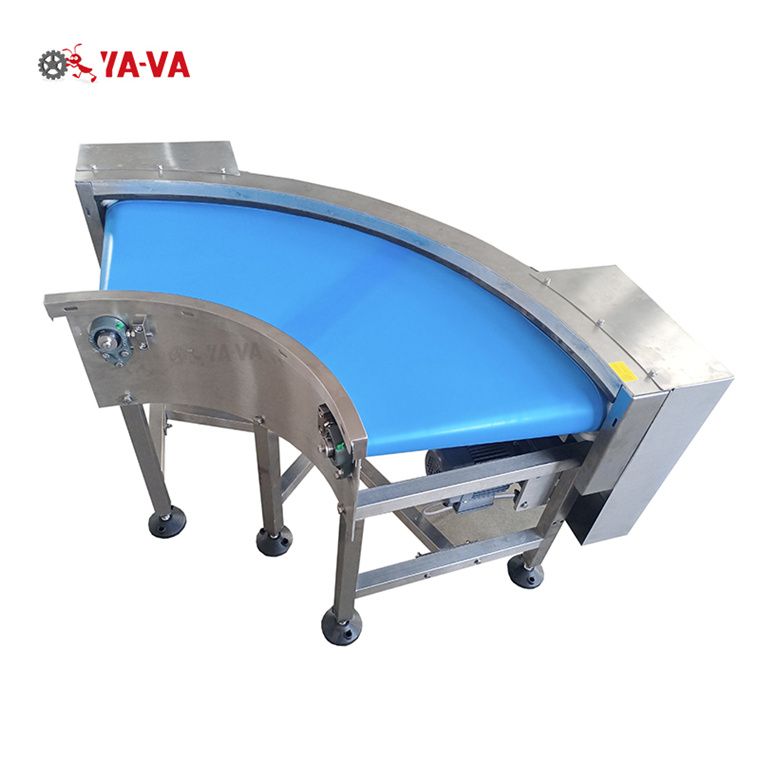
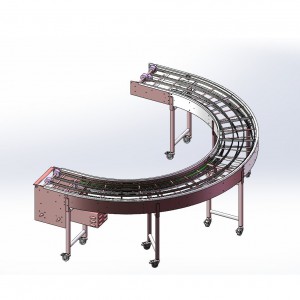
Curved plastic belt conveyors enable smooth 90° and 180° directional changes in compact case packing areas, eliminating the need for transfer tables and reducing product jams. Gravity roller spiral conveyors efficiently lower finished cases from elevated packaging mezzanines to ground-floor palletizing robots.
Cleanroom & Hygienic Zone Transport
Plastic belt conveyors with sealed drives and stainless steel structural frames satisfy stringent cleanroom requirements in premium hygiene product manufacturing. Their washdown-ready construction supports CIP (Clean-in-Place) protocols, achieving the high hygiene standards demanded by ISO Class 7 and ISO Class 8 production environments.
Spiral Elevation for Multi-Floor Facilities
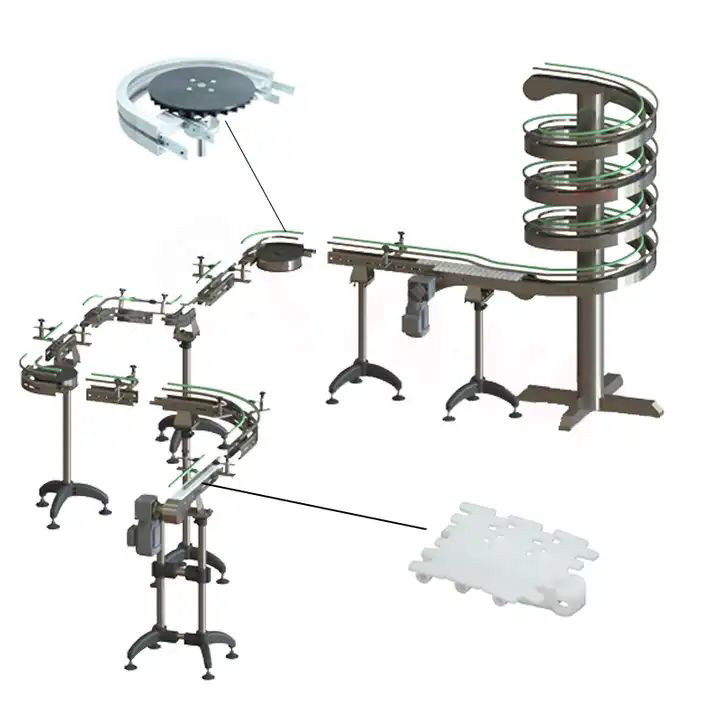
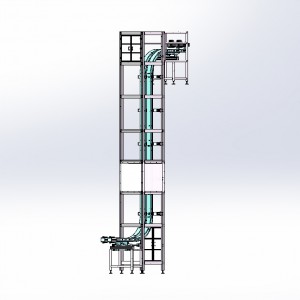
Chain-driven spiral conveyors provide continuous, space-efficient vertical transport of tissue packs, hygiene pouches, and wrapped product cases between production floors, eliminating elevator bottlenecks. Single-lane and dual-lane configurations accommodate output rates from 50 to 500+ units per minute.
Feature Products
More than 20 years focusing on transportation machinery R&D development and manufacturing. Stronger and bigger in the industry scale and brand.
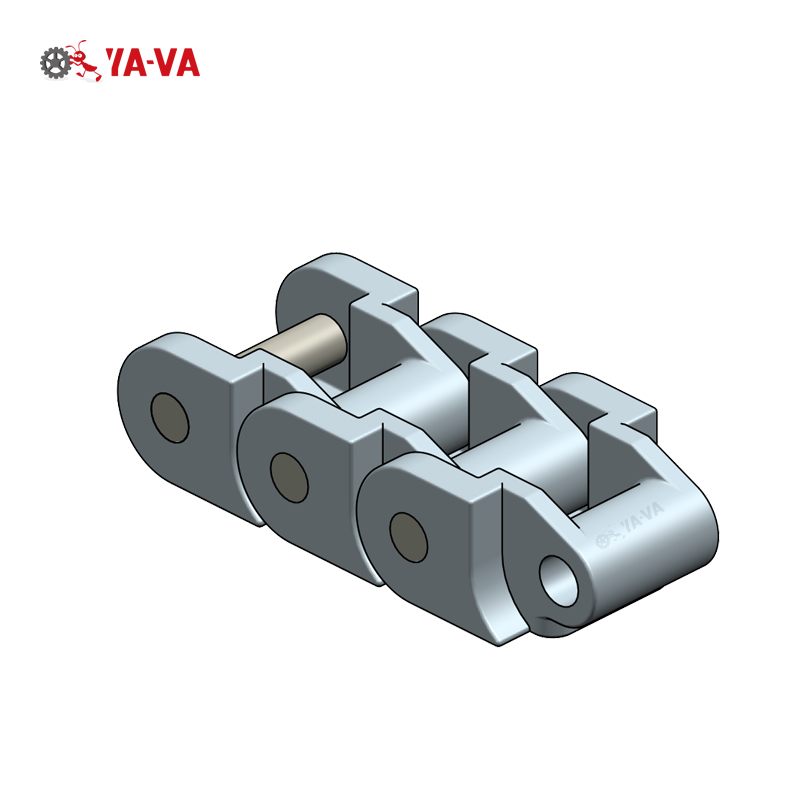
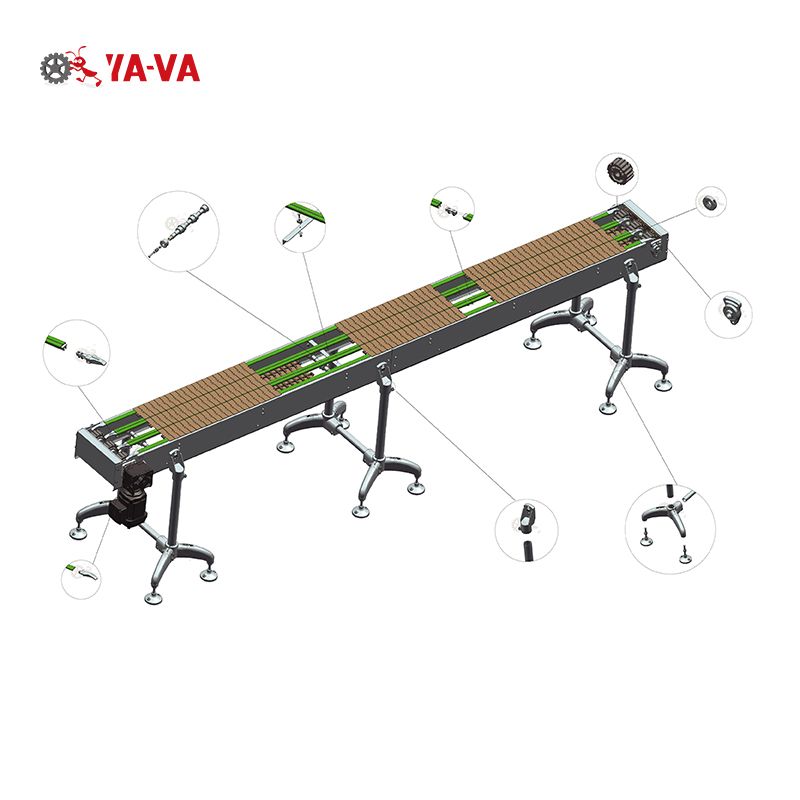
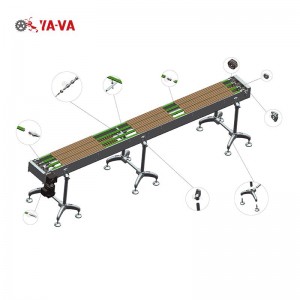
Flexible slat chain conveyor products lines cover a wide range of applications. These multiflexing conveyor systems use plastic chains in many configurations, delivering unmatched reliability across tissue, hygiene, and personal care production environments.
Get in Touch


Our Strength
We are an independent company that has developed, produces and also maintains the conveyor system to ensure that our customers receive the most cost effective solutions available today. YA-VA is a leading high-tech company providing intelligent conveyor solutions across more than 30 countries worldwide.





YA-VA consists of Conveyor Components Business Unit, Conveyor Systems Business Unit, Overseas Business Unit (Shanghai Daoqin International Trading Co., Ltd.) and YA-VA Foshan Factory — delivering end-to-end conveyor intelligence for the tissue and hygiene industry.
For inquiries about our products or pricelist, please leave a message and we will be in touch within 24 hours. Our engineers are ready to design a custom plastic belt conveyor solution for your production line.
News & Information
YA-VA Looks Forward to Welcoming You in June 2026
Stay tuned for our upcoming exhibition presence in June 2026. We will be showcasing the latest advancements in plastic belt conveyor technology for tissue and hygiene manufacturing automation.
View Details →
YA-VA Thailand Bangkok PROPAC
YA-VA Thailand Bangkok PROPACK exhibition concluded successfully. We sincerely thank all valued customers for visiting our booth. Your support is the driving force behind our progress. BOOTH NO: AY38.
View Details →Chain vs. Belt Conveyor: Key Differences & Types of Conveyor Chains Explained
What is the difference between chain and belt conveyor? Chain conveyors and belt conveyors both handle materials but differ in design, function, and applications — understanding these differences is critical to selecting the optimal system for tissue and hygiene production lines.
View Details →





Complete Conveyor Product Range for Tissue & Hygiene
Discover our full range of plastic belt conveyor products engineered for every stage of tissue paper and hygiene product manufacturing — from raw roll infeed to finished goods dispatch.